
Our Story
Two years. One convergence.
The Vision
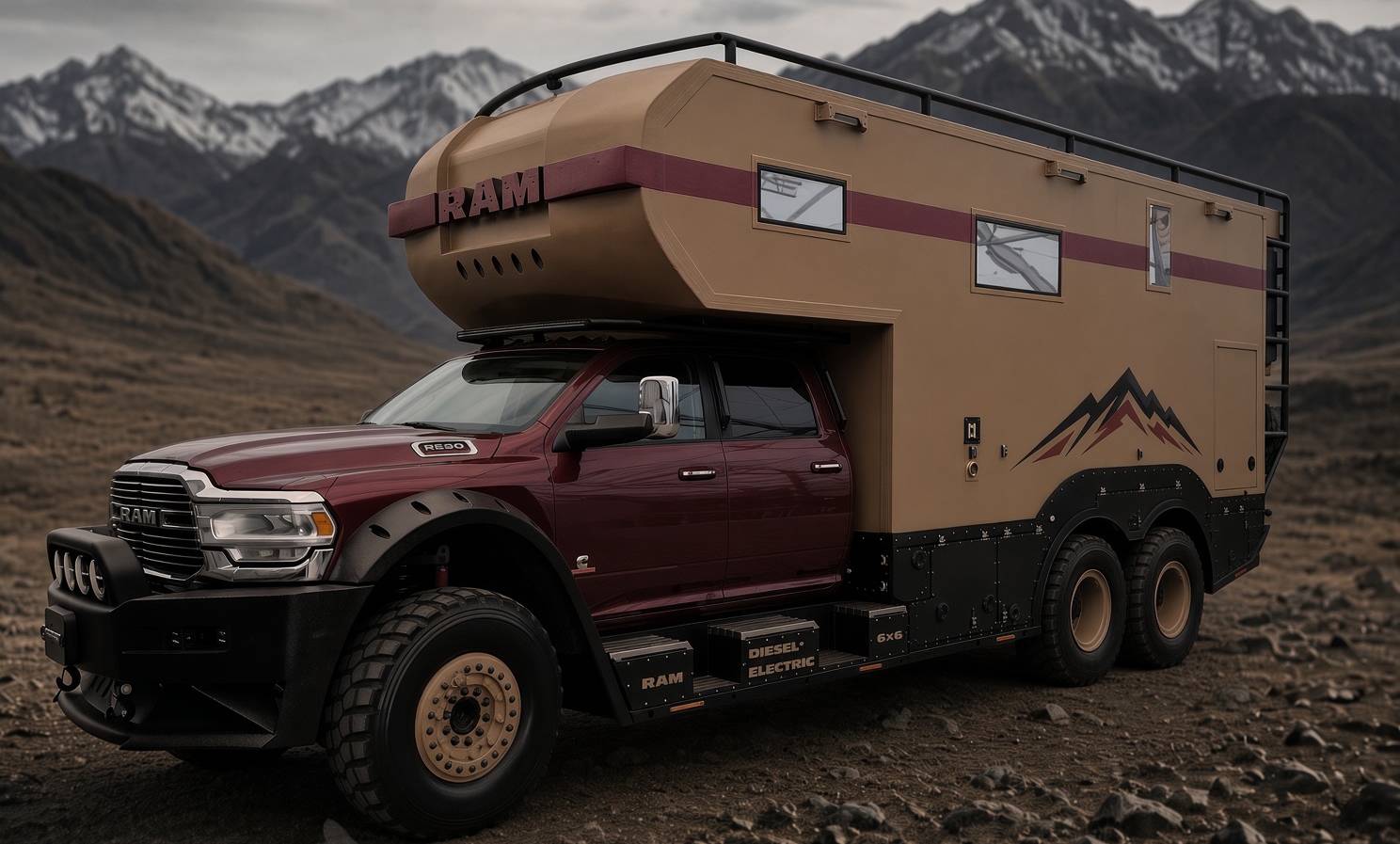
We wanted to build a vehicle for a different kind of freedom — one that begins where civilization ends. A fully self-sufficient home and expedition platform, designed to carry everything needed to live, explore and remain protected for extended periods in the most remote corners of the planet.
Our ambition was to go beyond the limits of infrastructure — and make the wild our destination, not our boundary.
Not a camper. Not a truck. A mobile base.
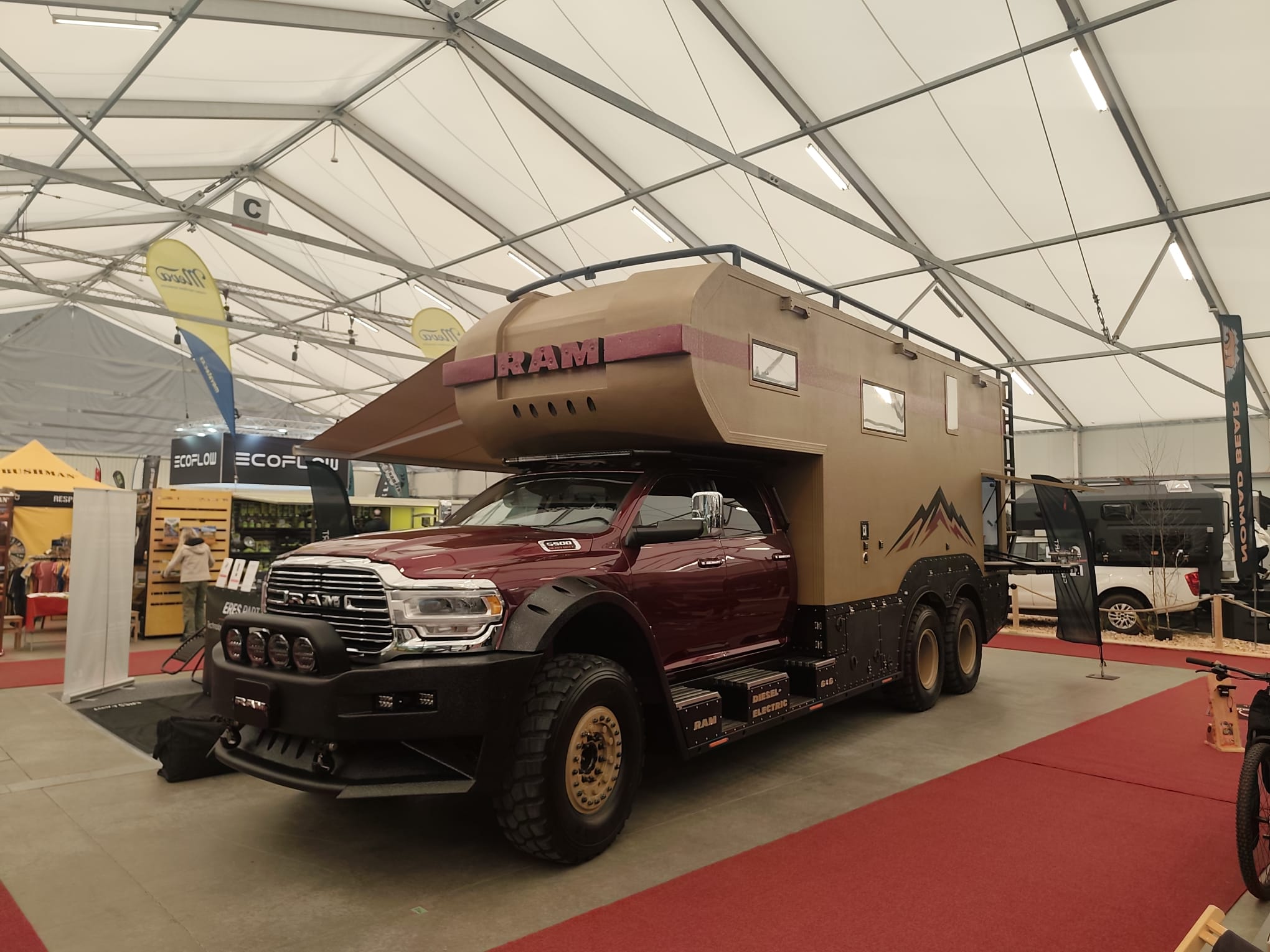
It took us two years.
Two years of researching motorhomes, expedition vehicles,, and the uncomfortable gap between what the market offered and what the wilderness actually demands. We looked at factory-built overlanders that crumbled after one season of salt and dust. We looked at military trucks that treated comfort as a defect. We looked at luxury RVs that would strand you the moment the pavement cracked.
None of them were wrong. None of them were ours. It was not easy to decide what we truly wanted — and what we were truly willing to pay for, in both money and time. In the end, we found a compromise between ambition and reality. Not a surrender. A convergence.
Defining the Requirements
We were searching for a heavy-duty chassis. Not necessarily a truck in the traditional sense, but something strong enough to carry what we were about to build: a fully integrated habitat, 650 liters of fuel, four independent water systems, and enough battery capacity to power a small cabin.
We also wanted a reliable diesel engine with an automatic transmission. And crucially, we wanted a quiet, pickup-like driving experience in a modern cab.
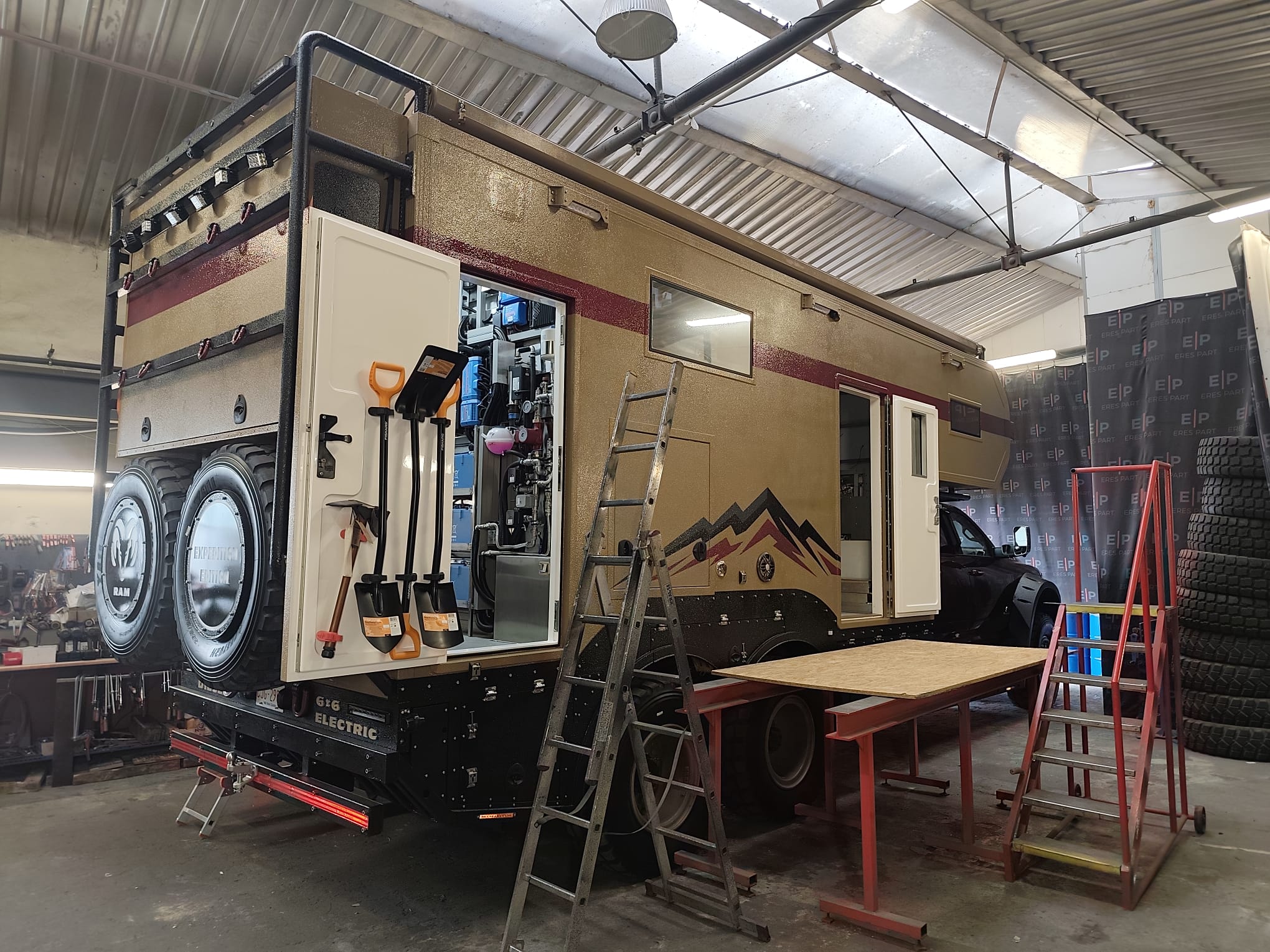
A vehicle that could leave infrastructure behind.
The Foundation
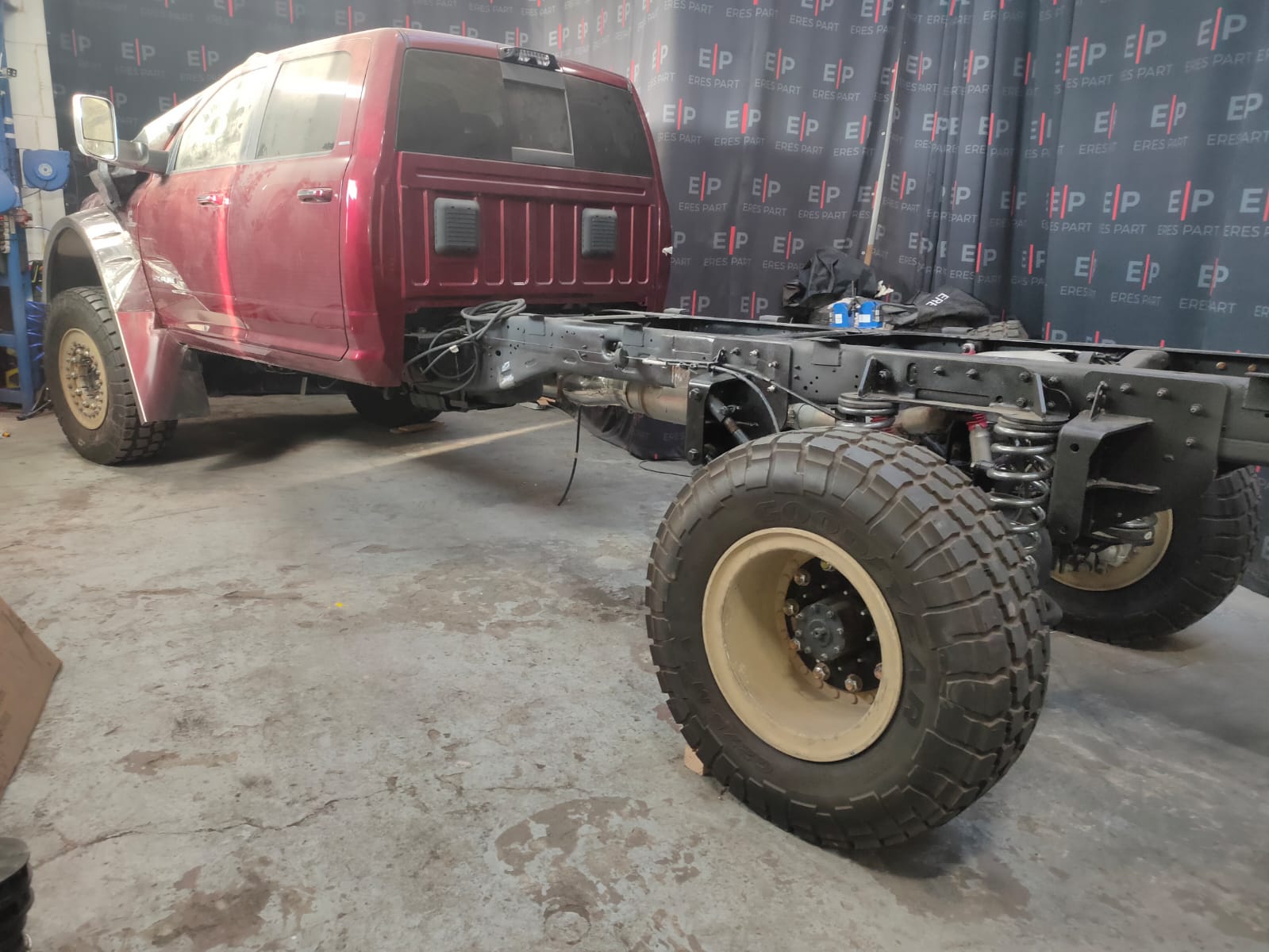
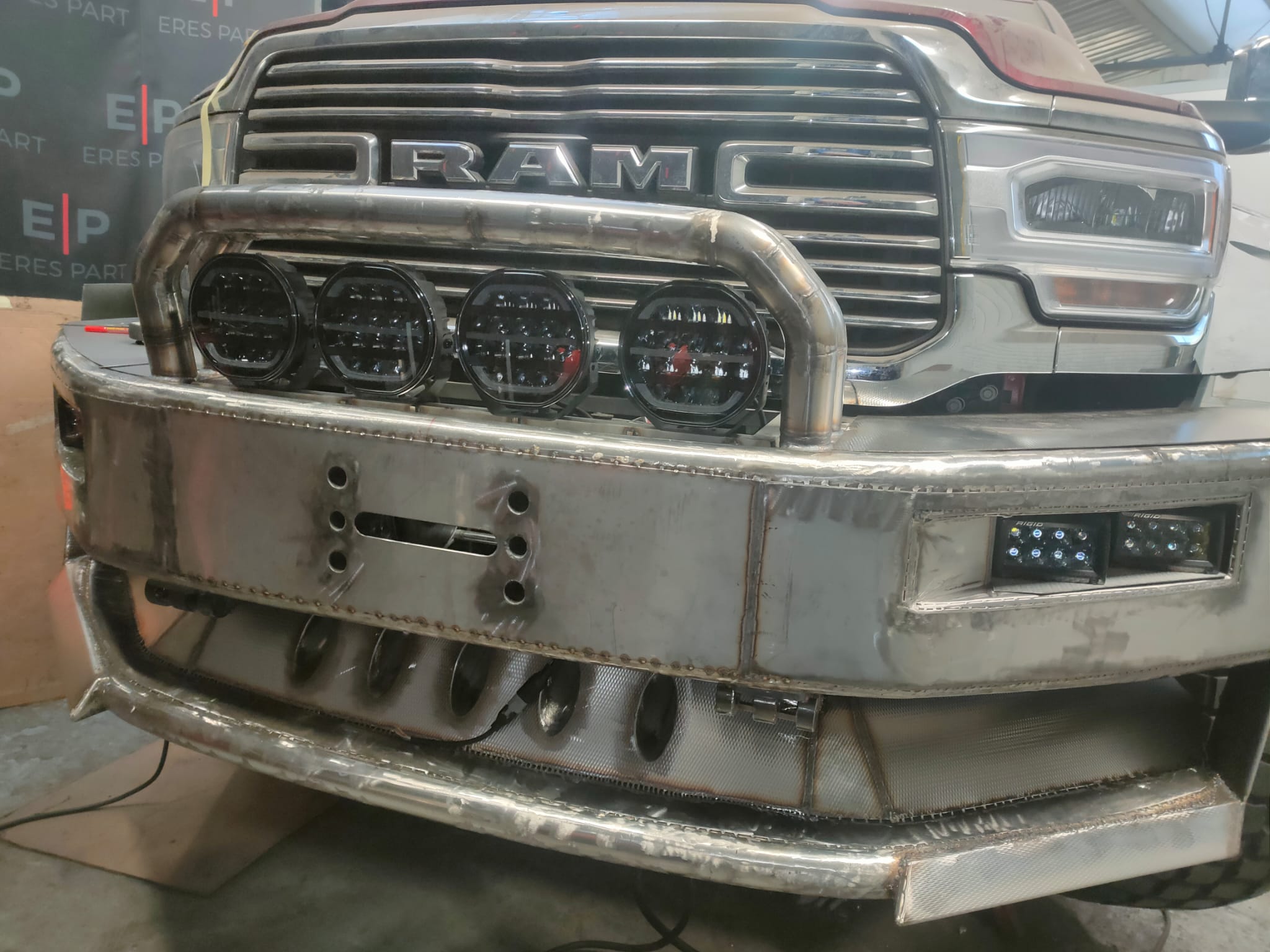
After surveying the global market, the only chassis that met all of these criteria was the 2022 RAM 5500.
It was not chosen for prestige. It was chosen for global survivability. When you are in the Bolivian Altiplano, a Cummins part can be found. A bespoke European transfer case cannot. The RAM 5500 gives us American muscle with a global logistics network — the intelligent foundation for an unintelligent environment.
The intelligent foundation for an unintelligent environment.
Building the Machine
Once the chassis was chosen, the next challenge was to turn it into something fundamentally different from a conventional expedition vehicle.
We needed a mobile base capable of operating independently — generating and storing its own energy, carrying enough fuel and water for extended stays, maintaining communications, and keeping every critical system under control.
So we built the machine around five essential systems:
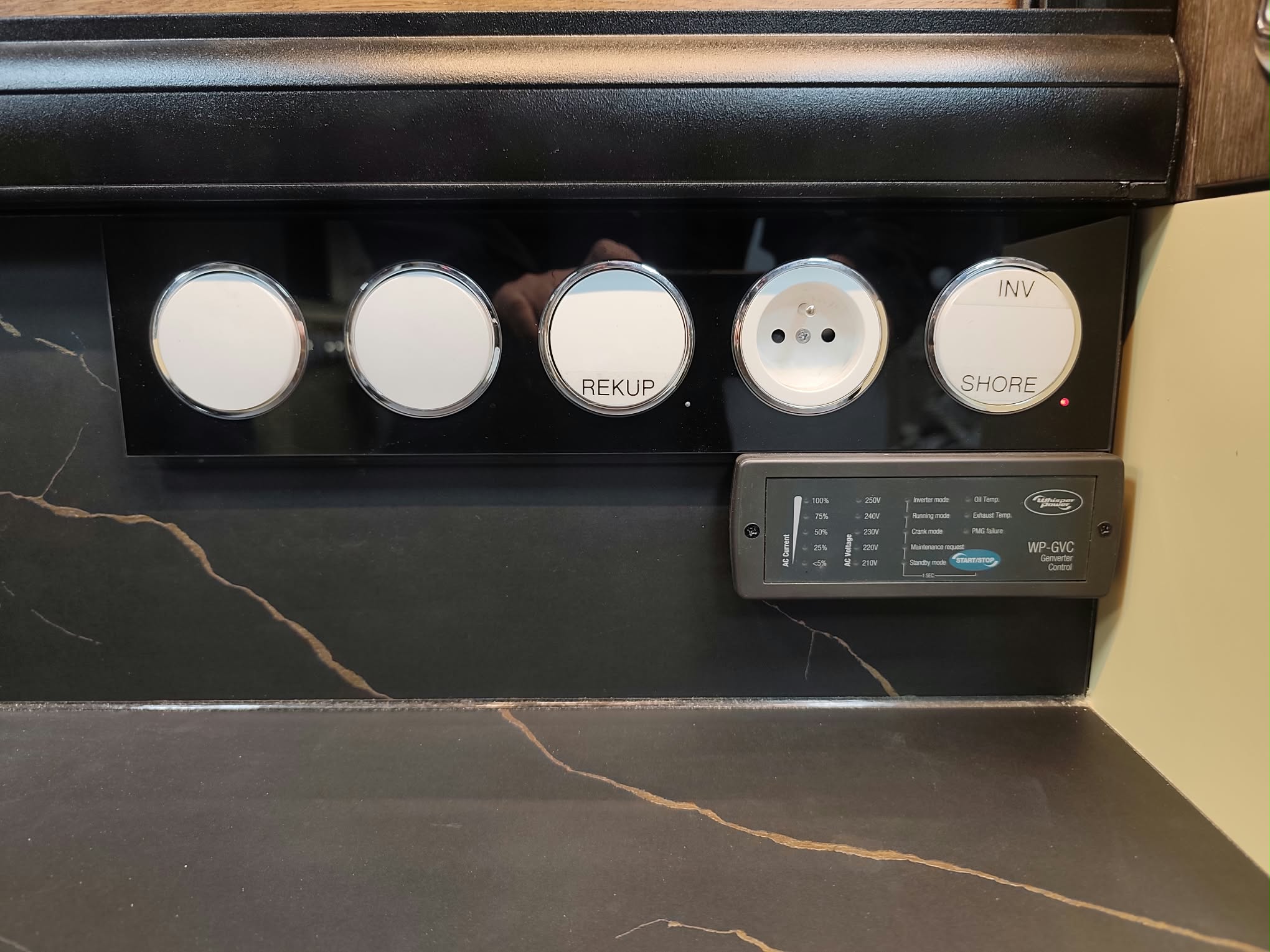
Energy - A 43 kWh battery system, supported by solar generation and 16.5 kW AC power, designed to provide reliable energy without relying on a grid.
Fuel - 650 liters of onboard diesel capacity — giving the platform the range and autonomy required to remain far beyond conventional infrastructure.
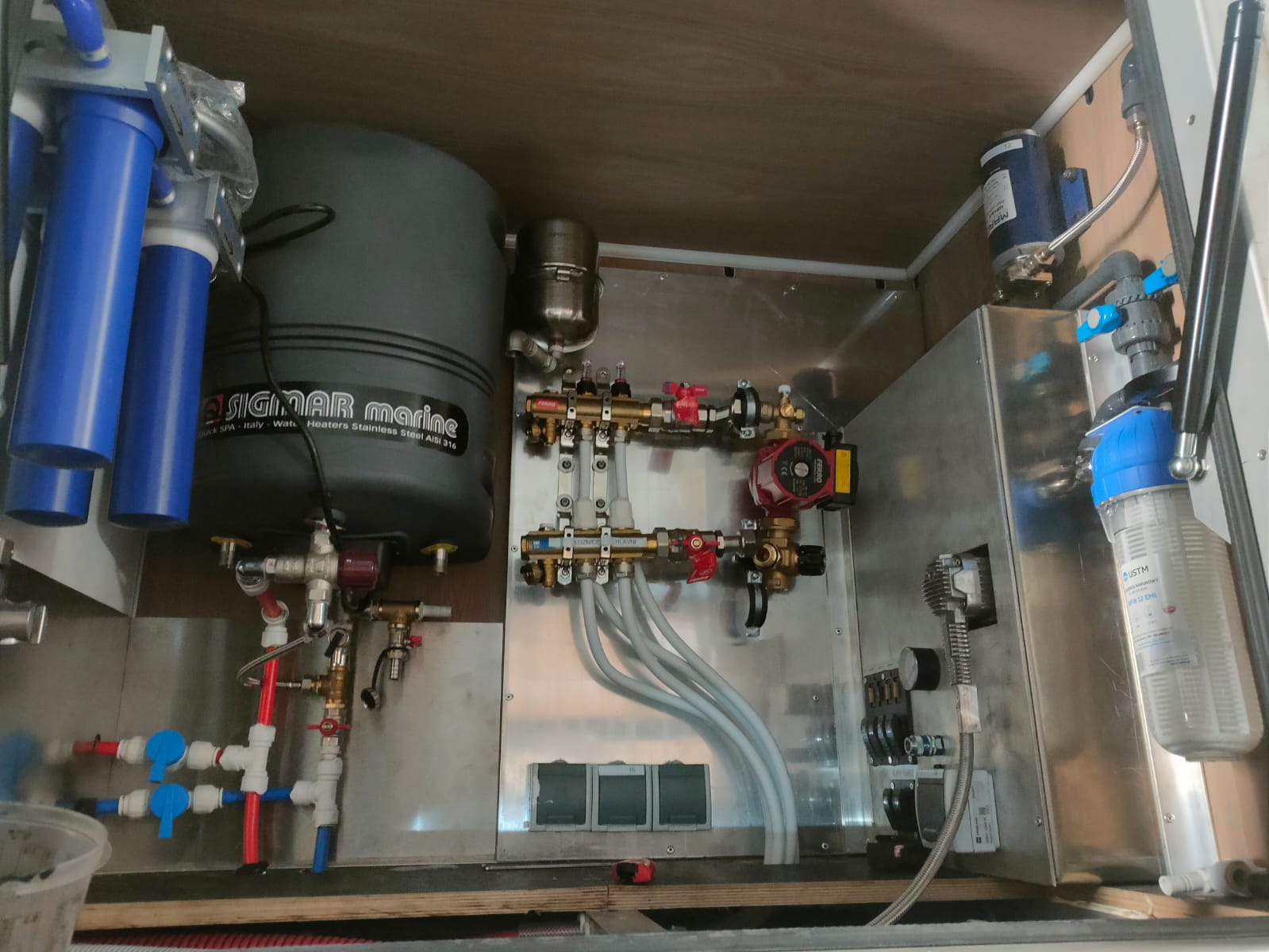
Water - Four dedicated water systems designed to manage the different requirements of life, operation and extended remote stays.
Communications - A communications architecture designed to keep the vehicle connected when conventional networks disappear.
Control - Onboard computing and AI systems bringing the vehicle’s energy, environmental and operational systems together into one coordinated platform.
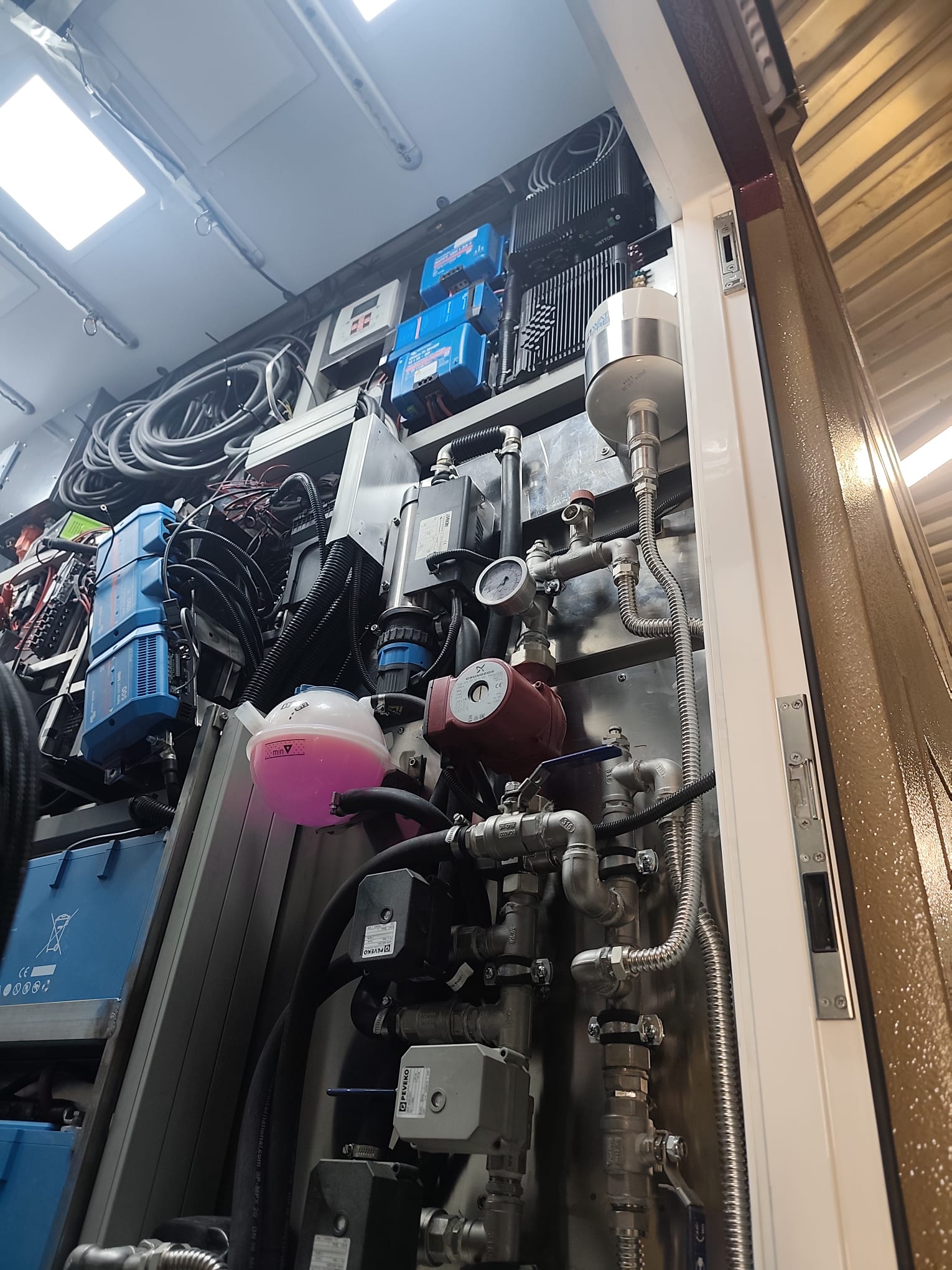
The result was no longer simply a truck carrying equipment. It became a self-contained mobile base — designed to carry its own infrastructure wherever we chose to go.
Engineered for independence. Built for the unknown.
Building the Habitat
A conventional motorhome is designed around roads, infrastructure and relatively predictable conditions. That was not the environment we were designing for.
We needed a living structure capable of surviving the same conditions as the vehicle itself — extreme temperatures, severe off-road movement and the continuous torsional loads generated by a heavy-duty 6×6 chassis.
That meant the habitat could not simply be mounted onto the truck as a conventional box.
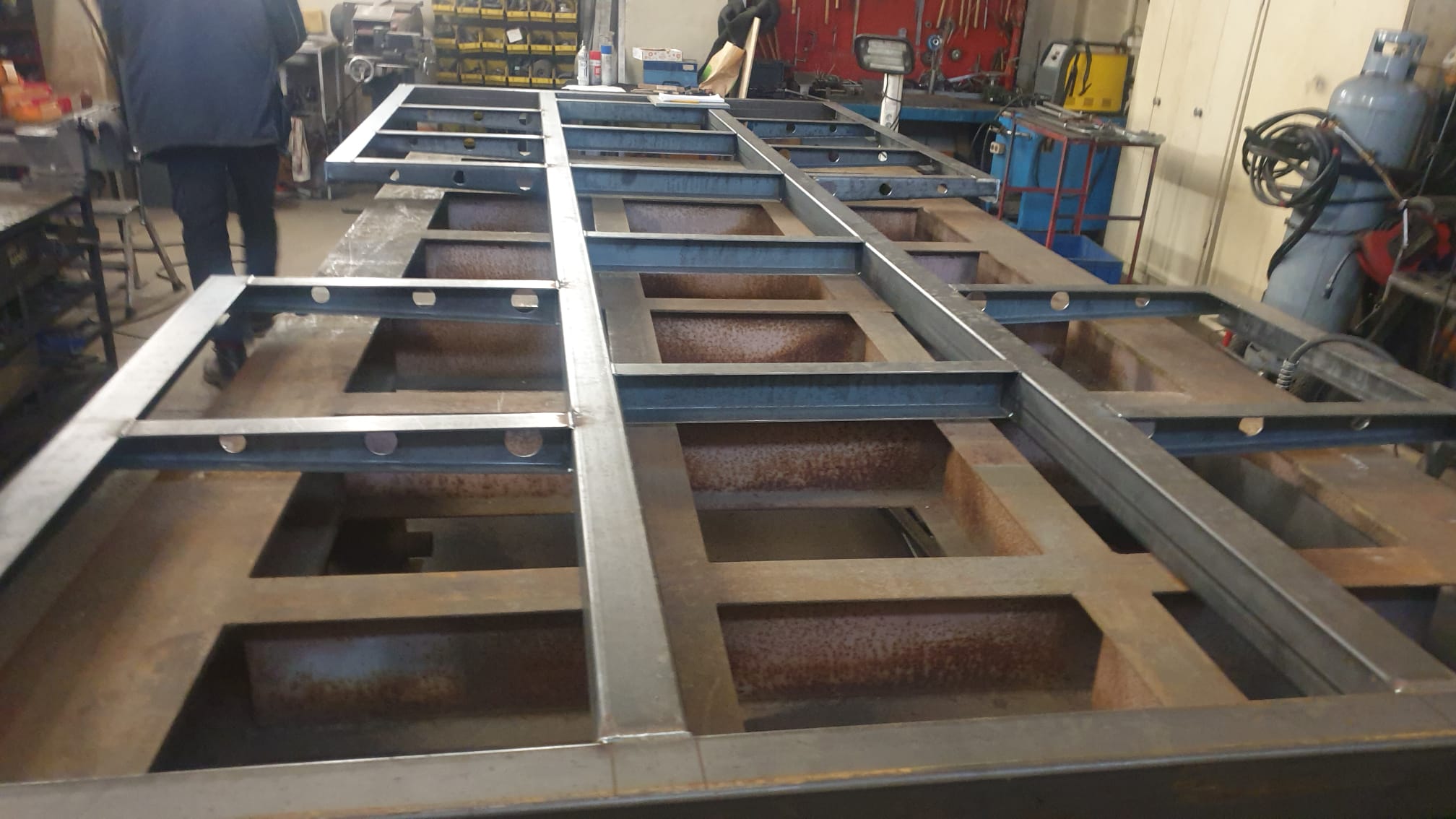
We developed a stressed-skin structure, engineered as an integral part of the vehicle. The body had to remain rigid enough to protect the interior, while accommodating the movement of the chassis beneath it. Every connection between the two became part of the structural equation.
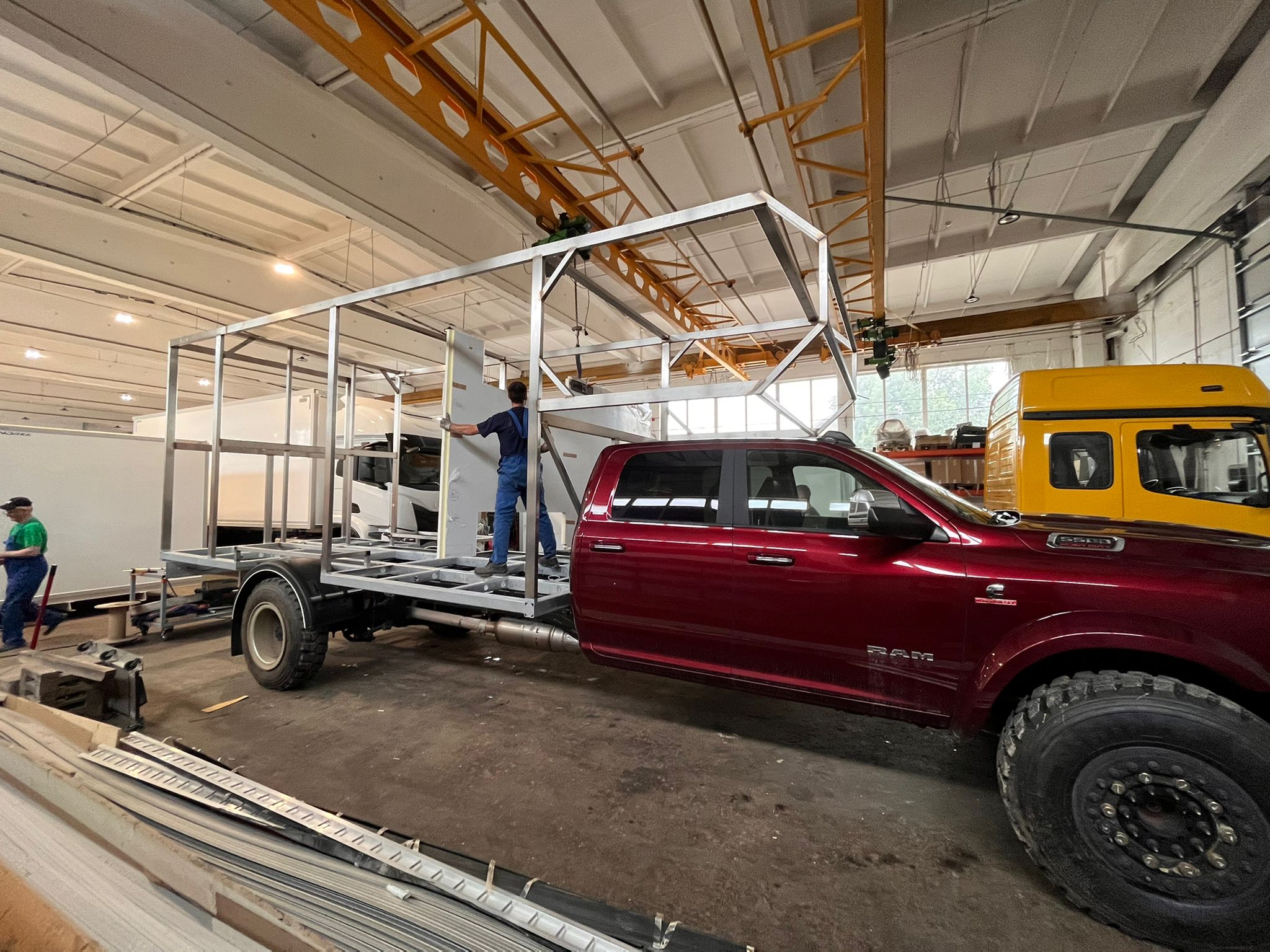
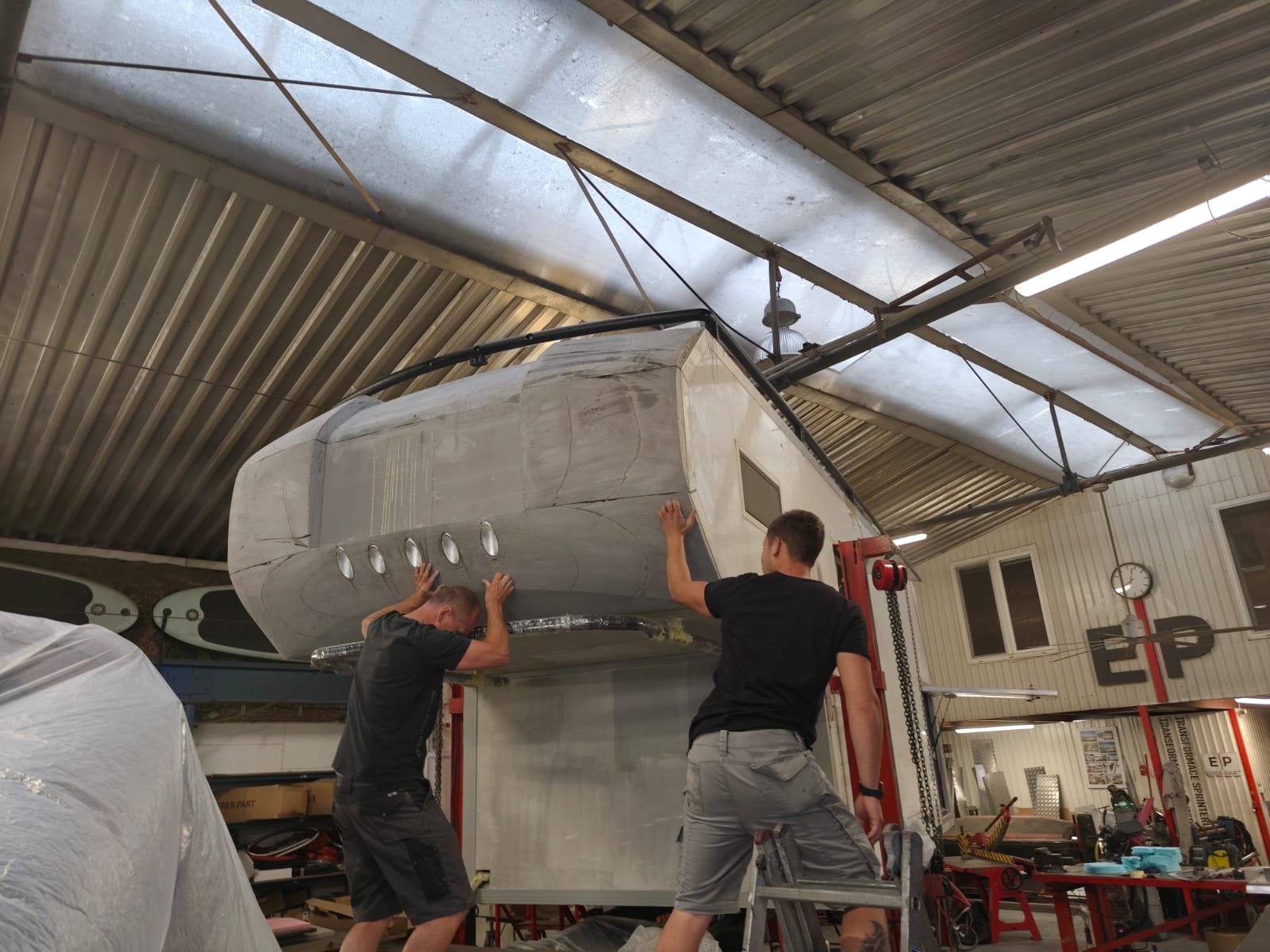
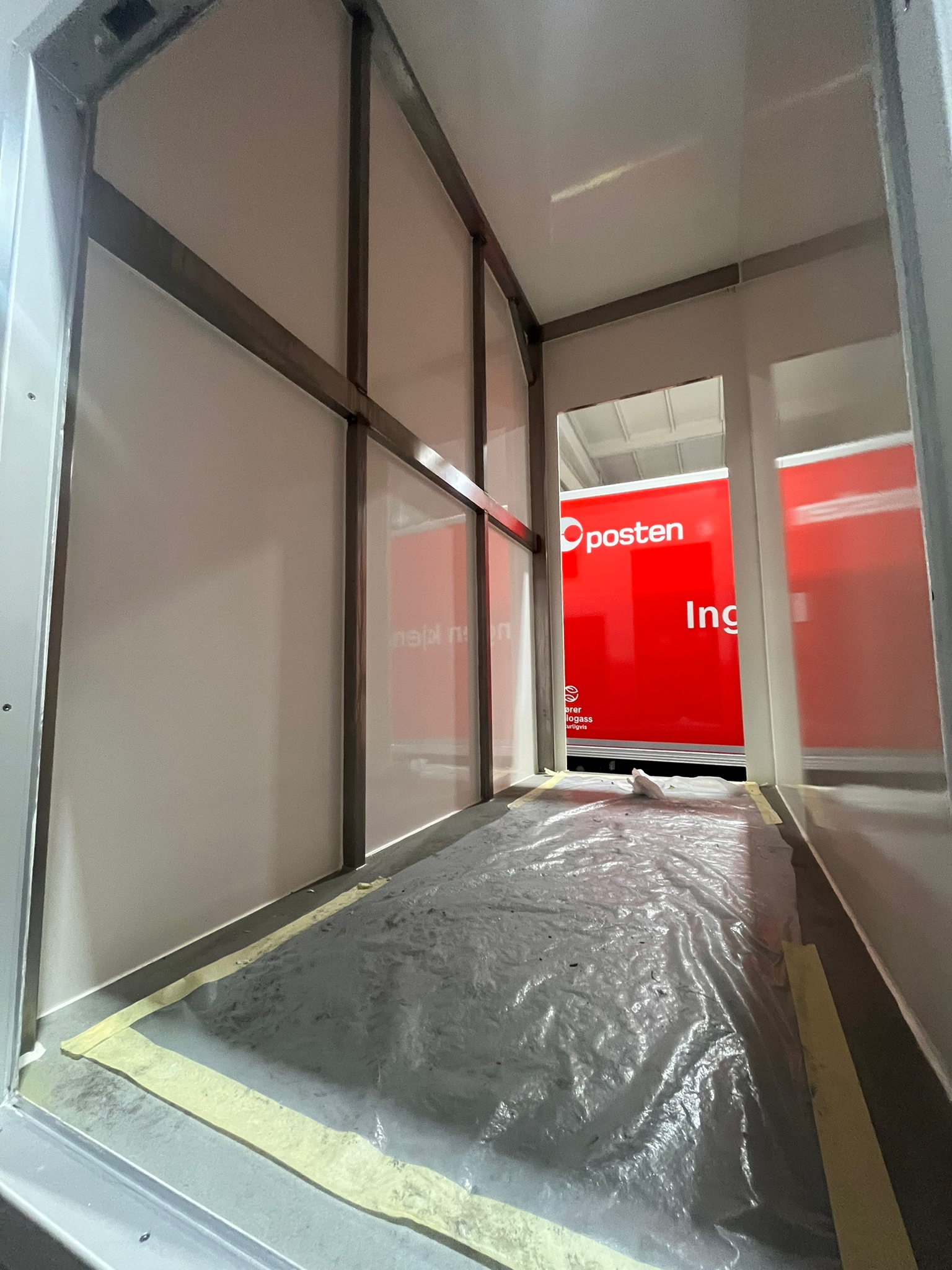
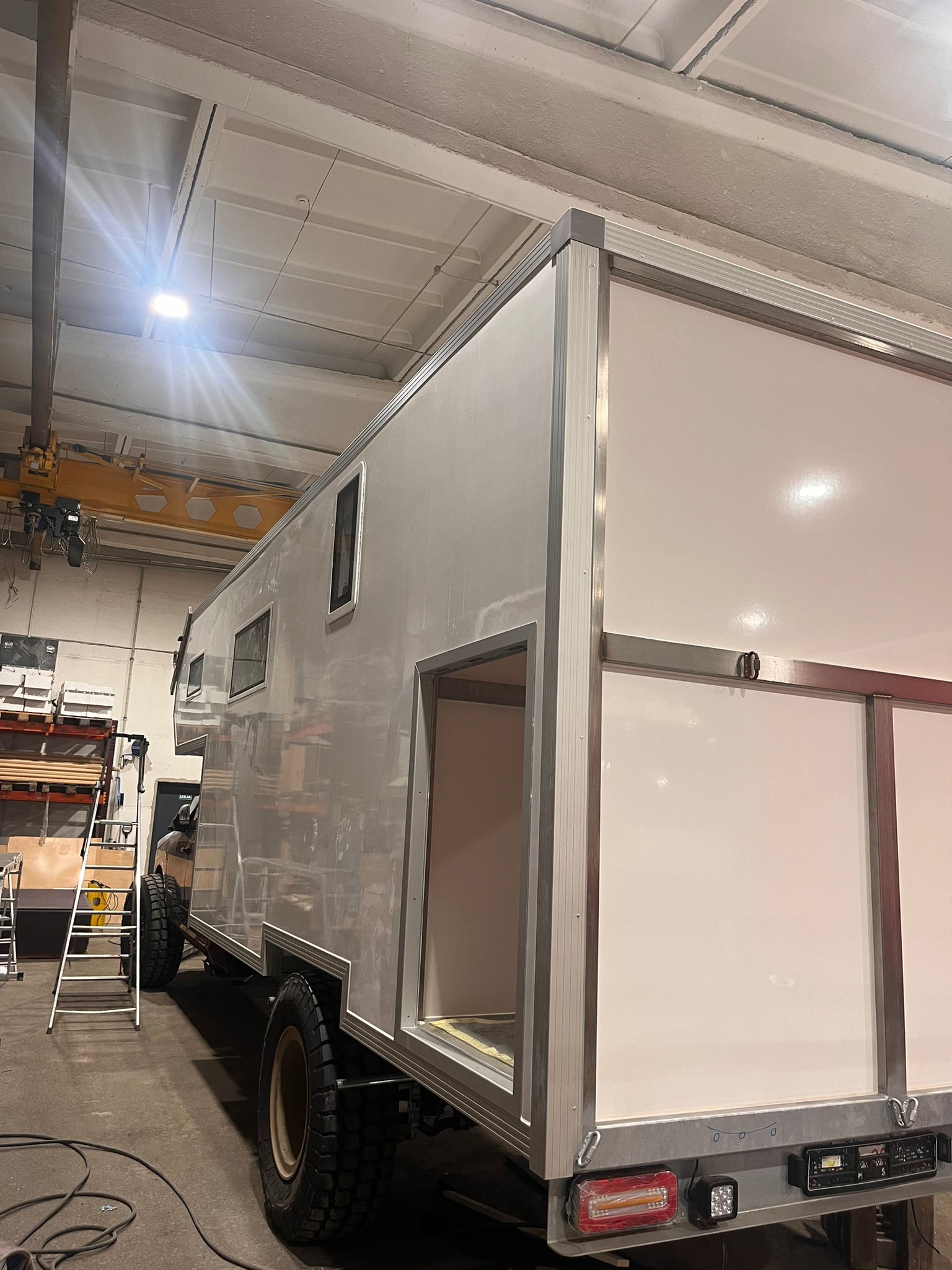
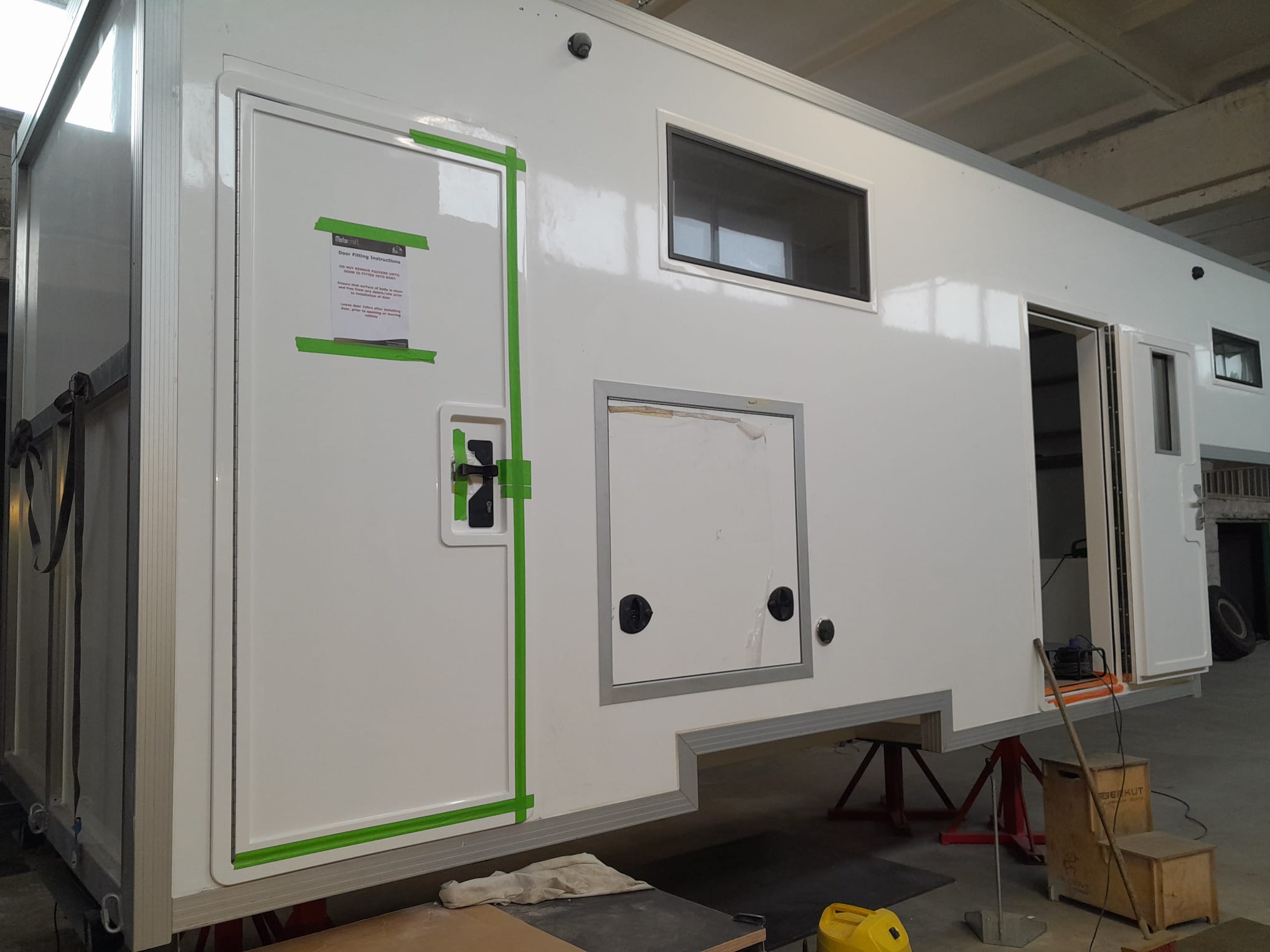
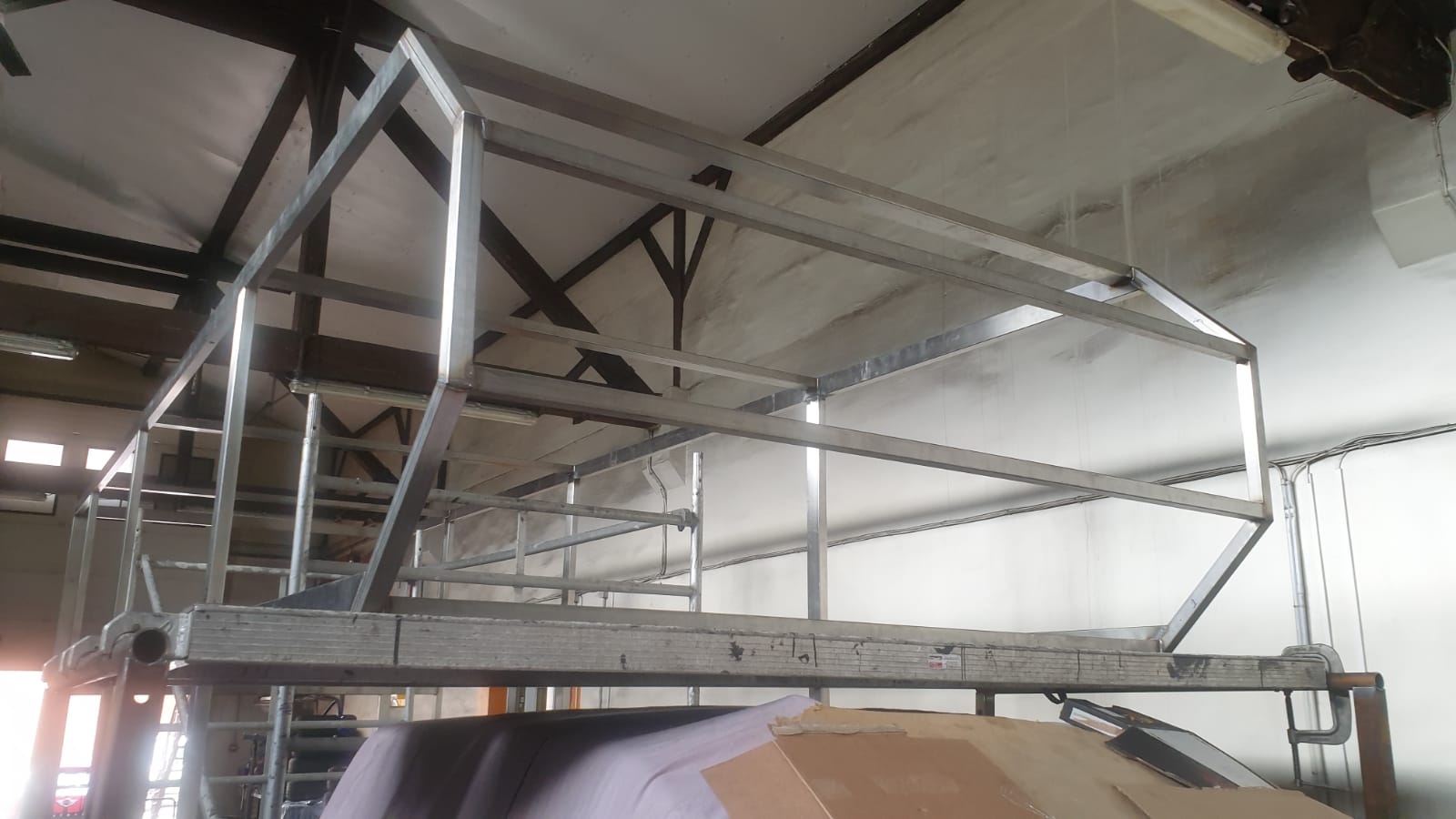
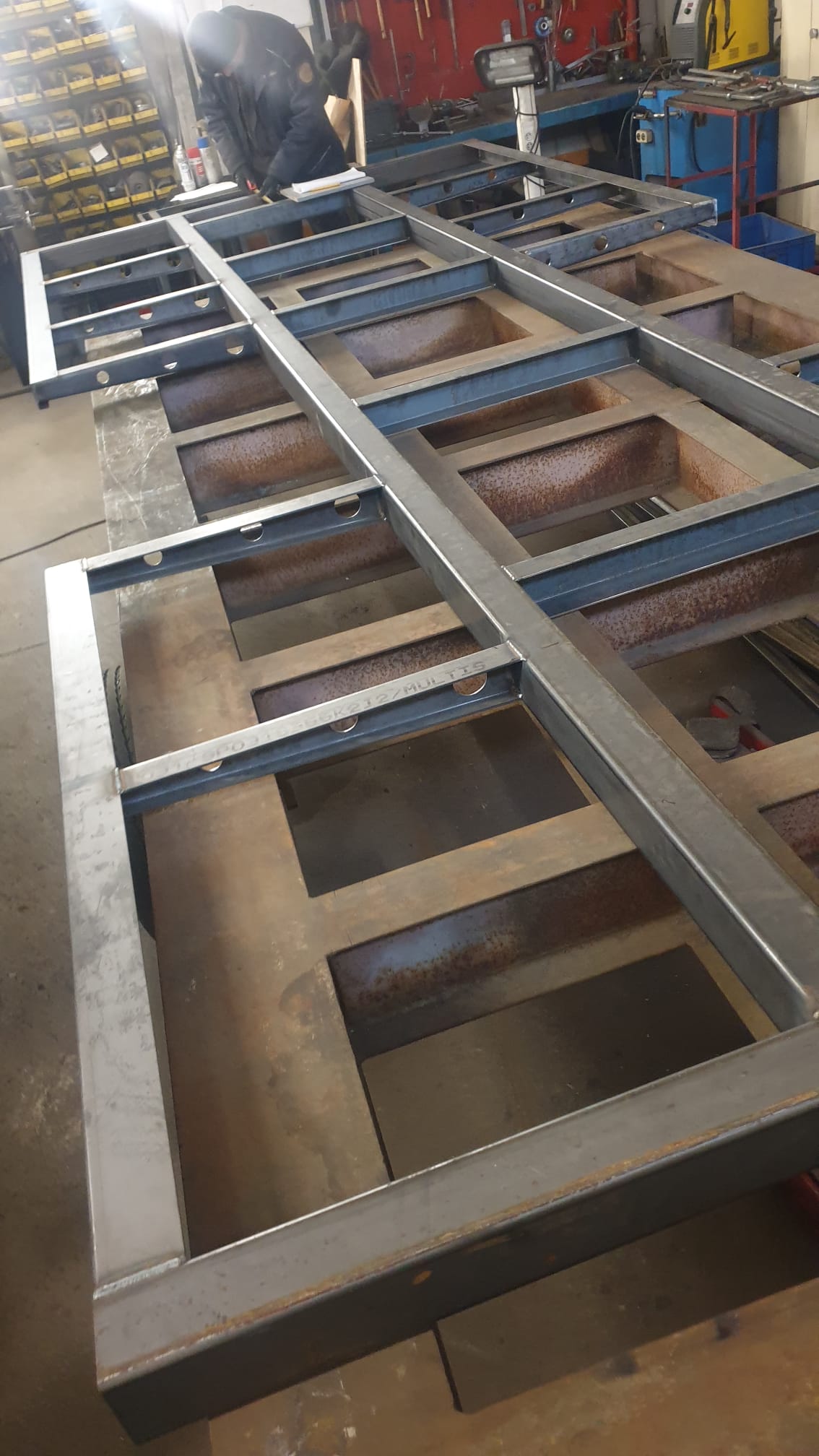
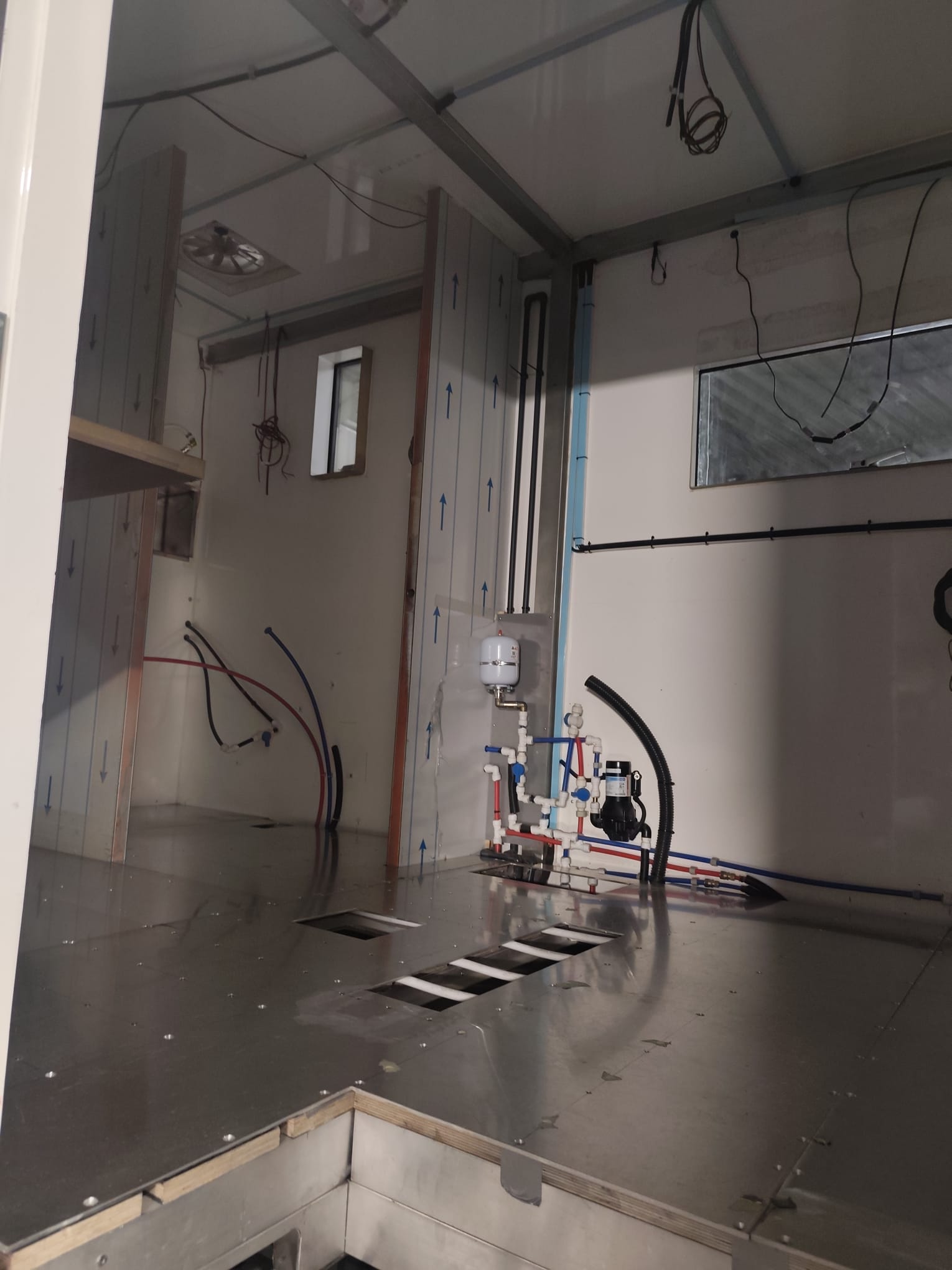
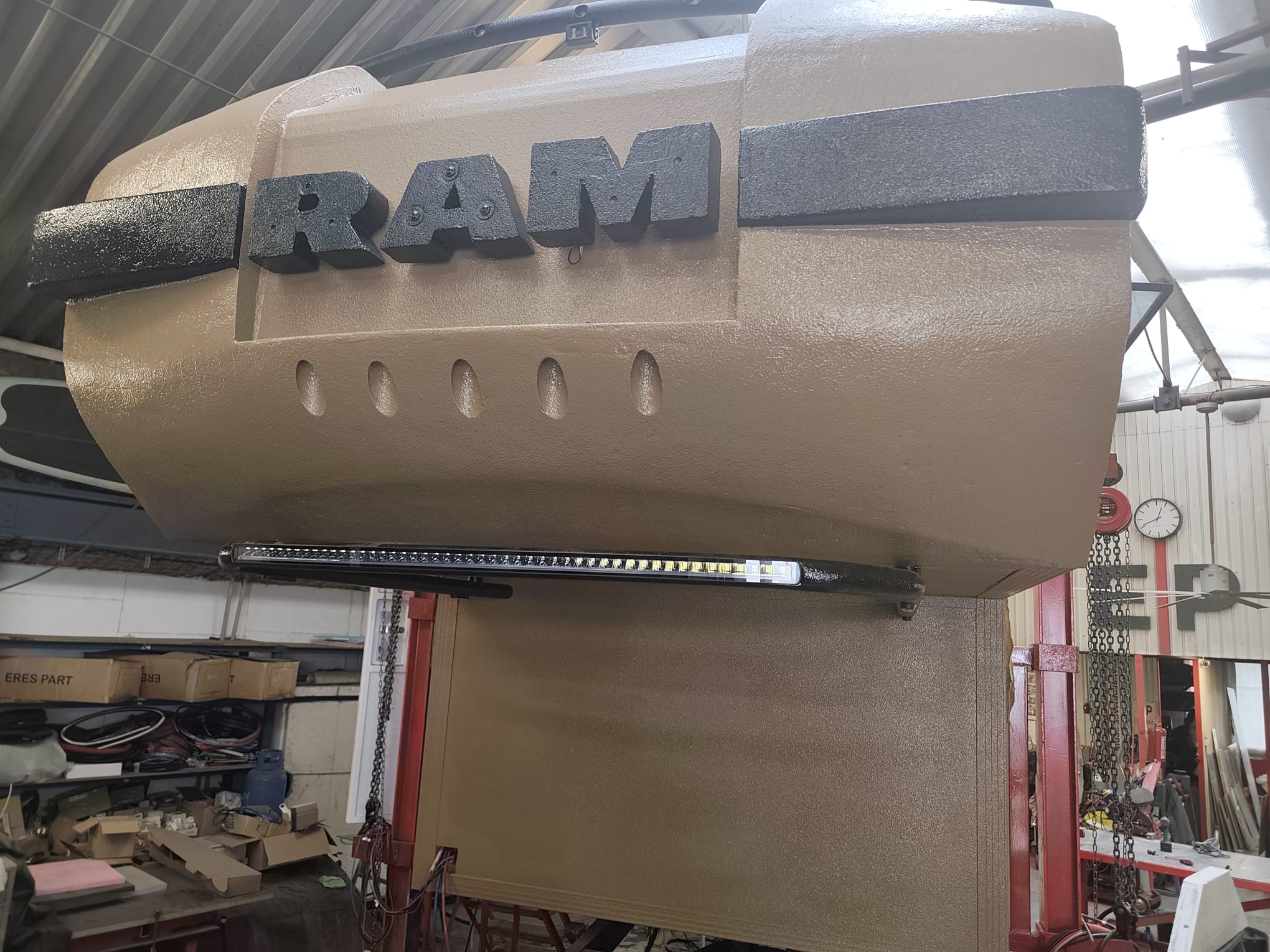
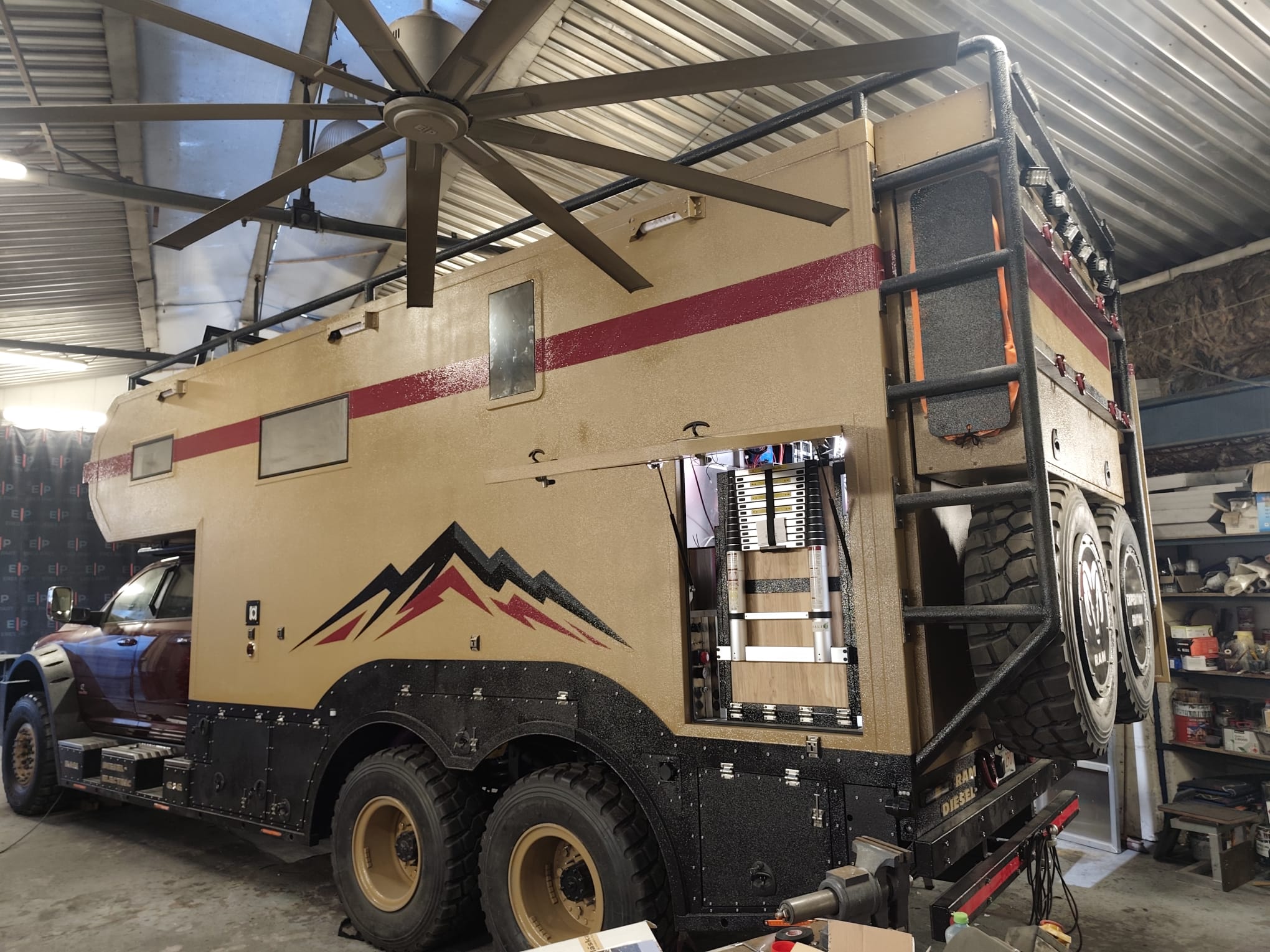
Inside that structure, we then had to create a completely different environment: a stable, thermally controlled and comfortable living space capable of operating far beyond conventional infrastructure.
The result was a habitat engineered not merely to travel with the vehicle, but to survive with it.
5 Star Hotel on Wheels
Life Inside
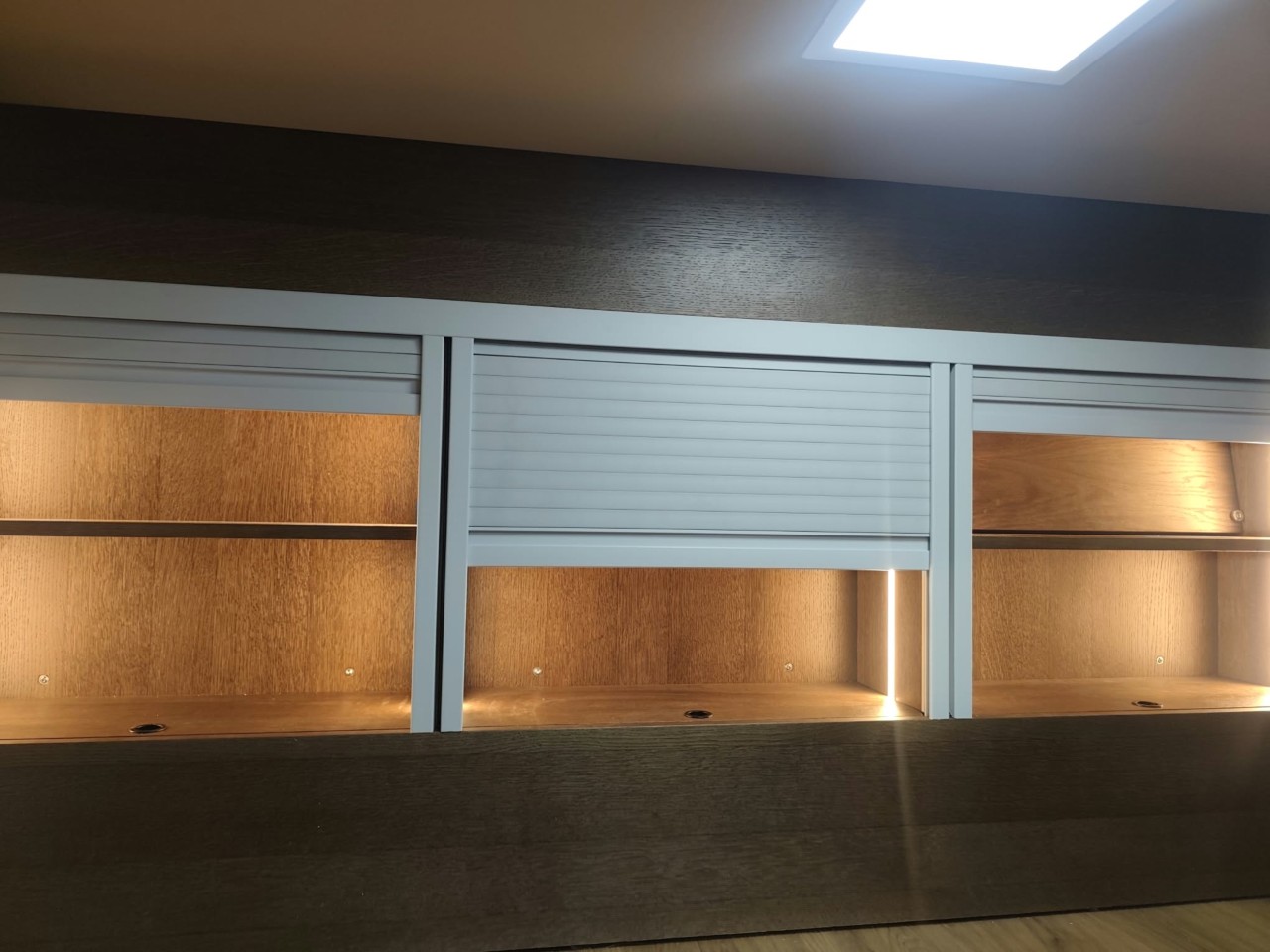
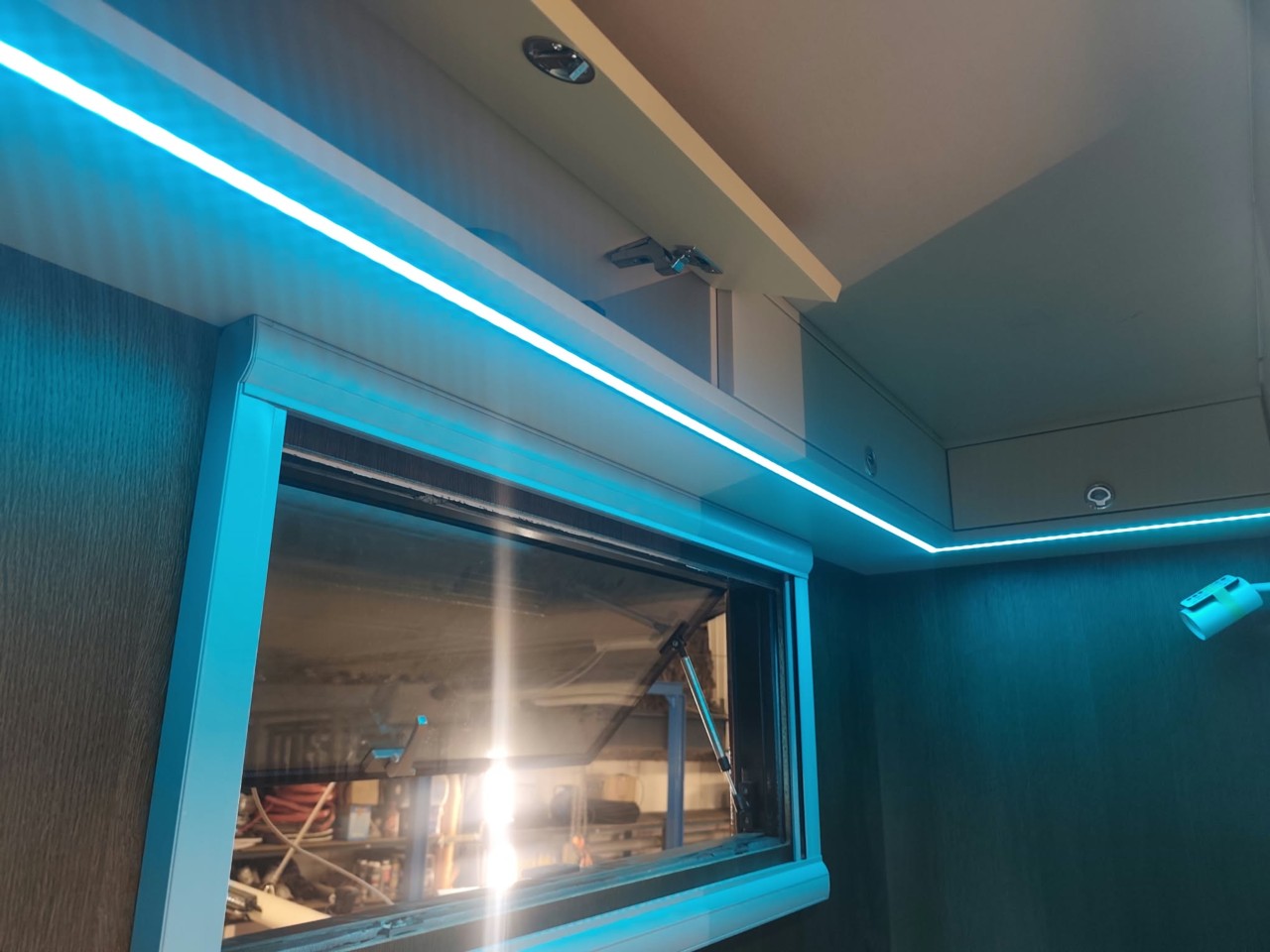
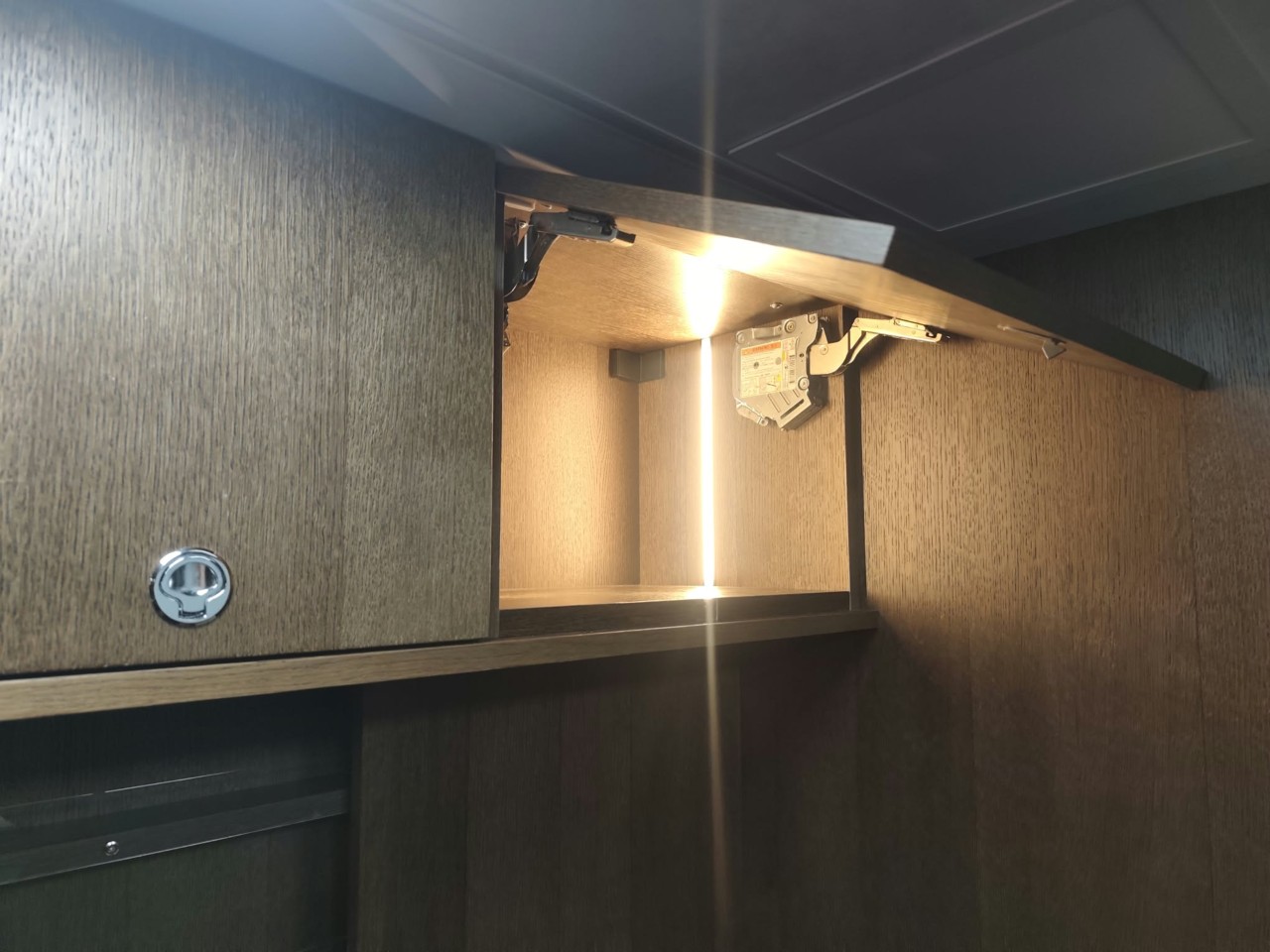
Step inside, and the wilderness remains just beyond the door — while the compromises of living in it begin to disappear. The habitat is designed as a fully equipped home for extended life beyond infrastructure, bringing residential comfort and everyday functionality into the expedition environment.
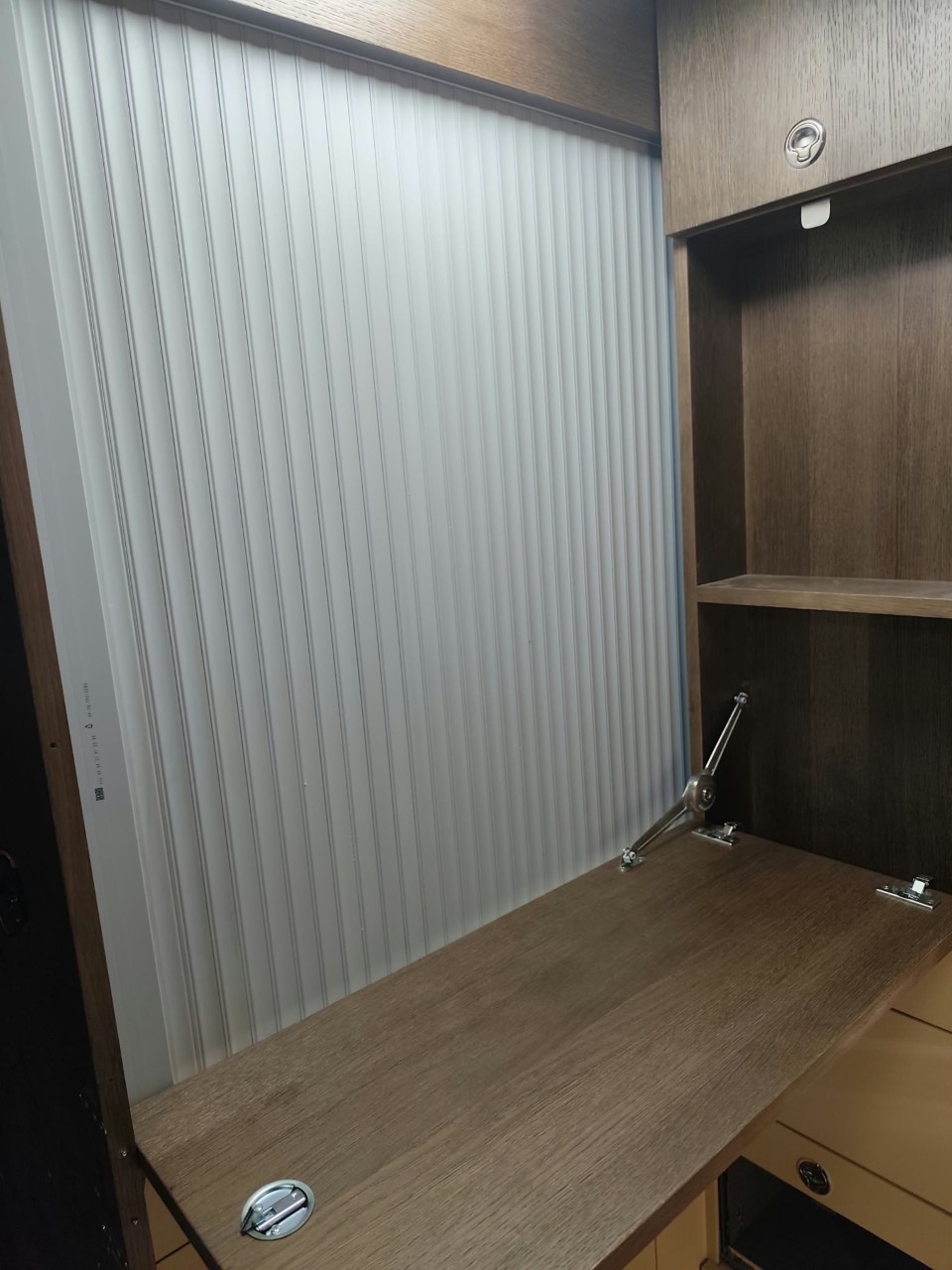
The living space is centered around a comfortable dining corner, with a table and seating that convert into an additional bed when needed, as well as a dedicated wardrobe for coats and outdoor clothing. Alongside it, the fully equipped indoor kitchen features a cooktop, microwave, electrical outlets, full-size appliances, a separate refrigerator and freezer, generous storage, and everything needed for extended life on the road.
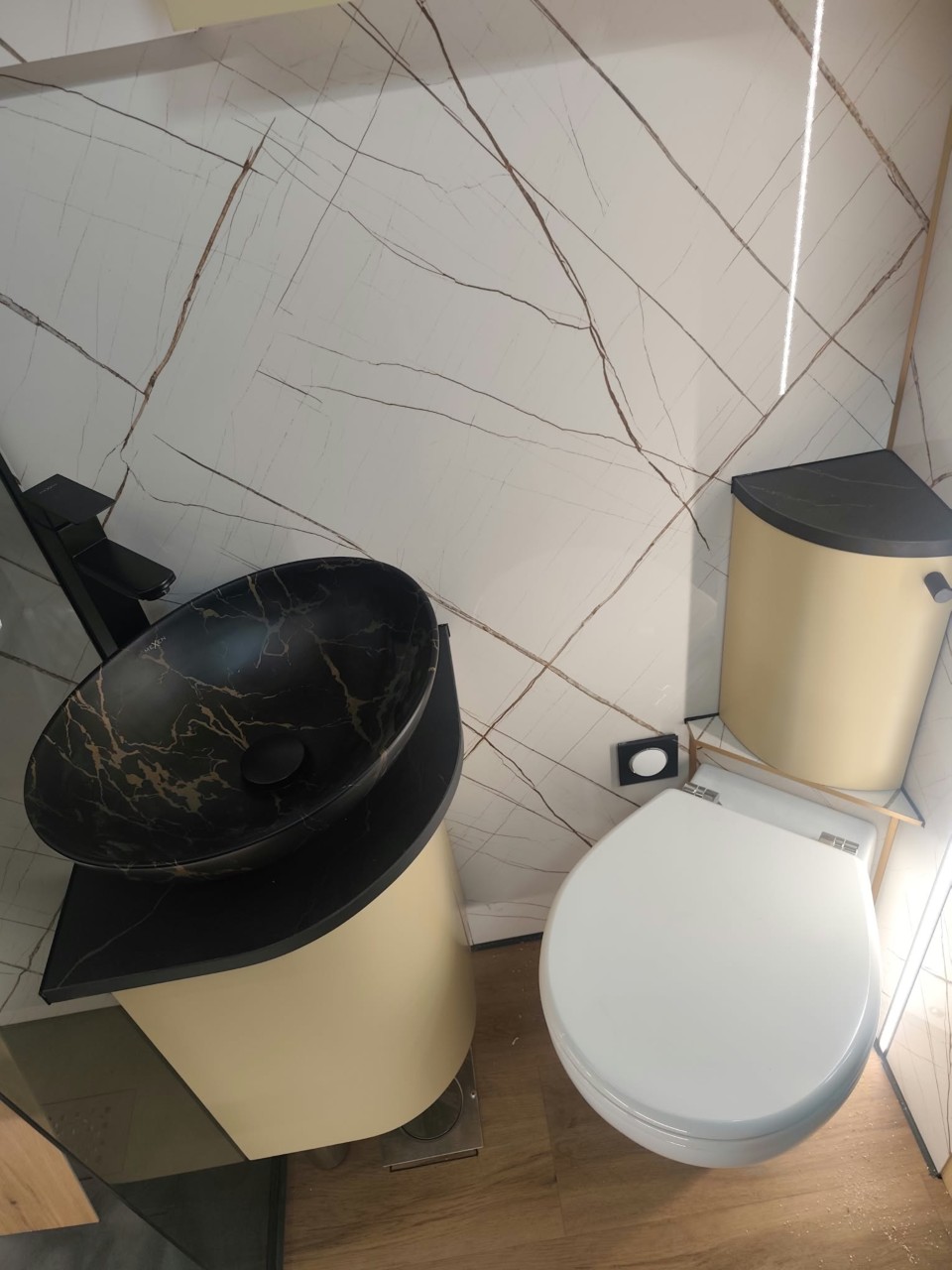
The sleeping area provides a king-size bed and a separate single bed, creating proper, permanent sleeping spaces without the need to reconfigure the interior each night. Together with the convertible dining corner, the Meridian provides four sleeping berths in total. A hotel-style indoor shower and marine-grade toilet complete the residential environment, while a compact washing machine adds another level of independence on longer expeditions.
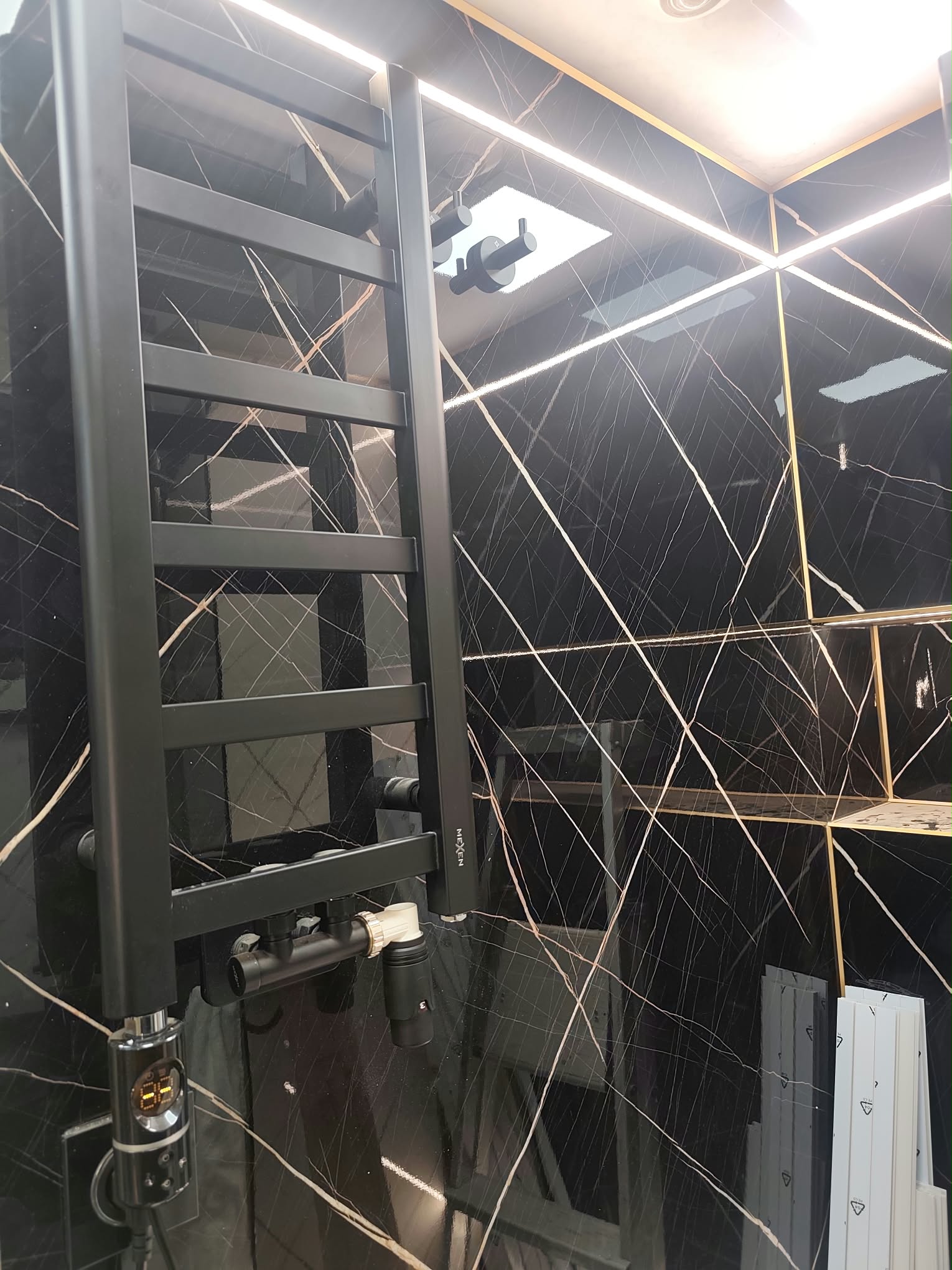
Climate Control
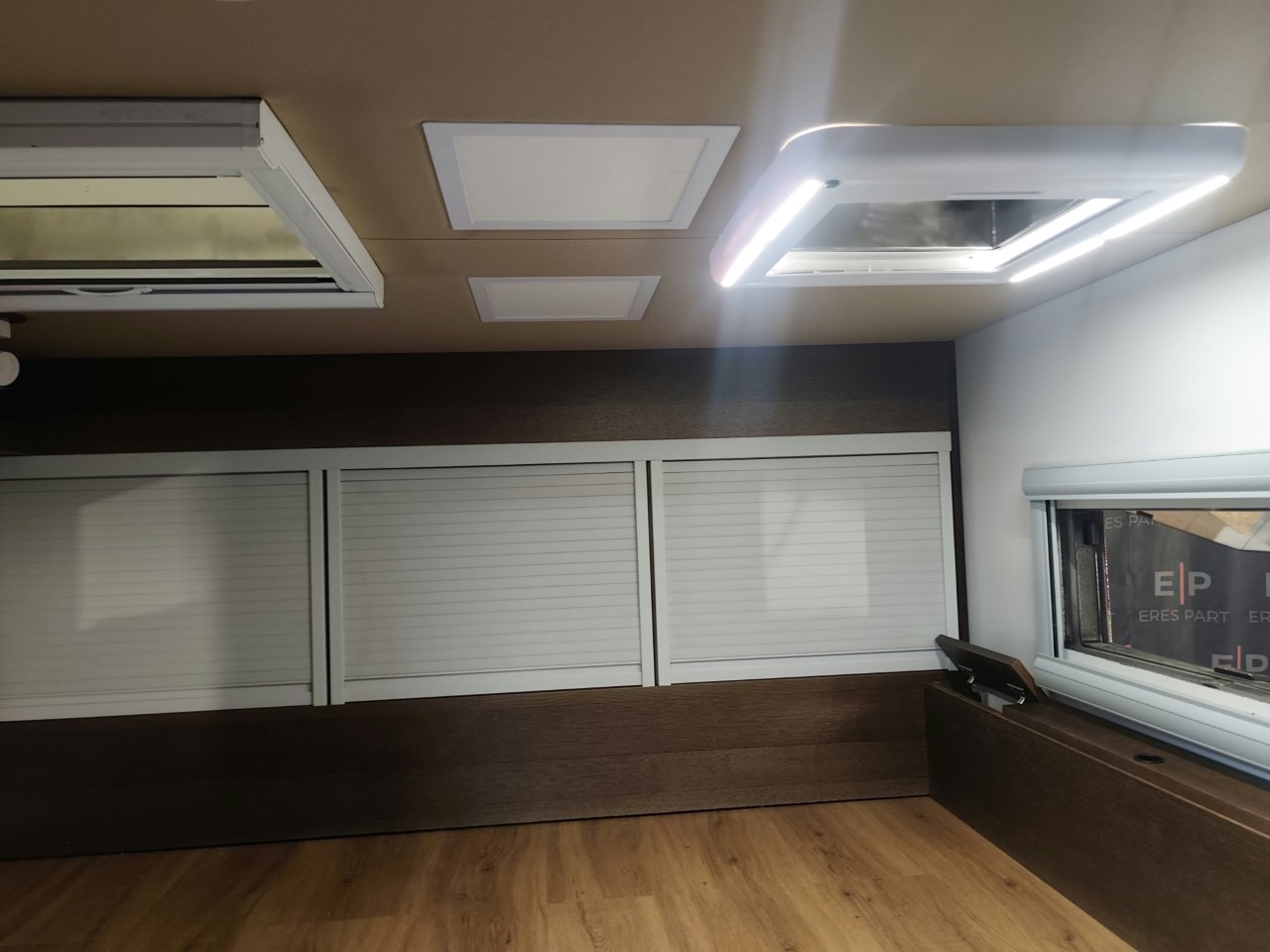
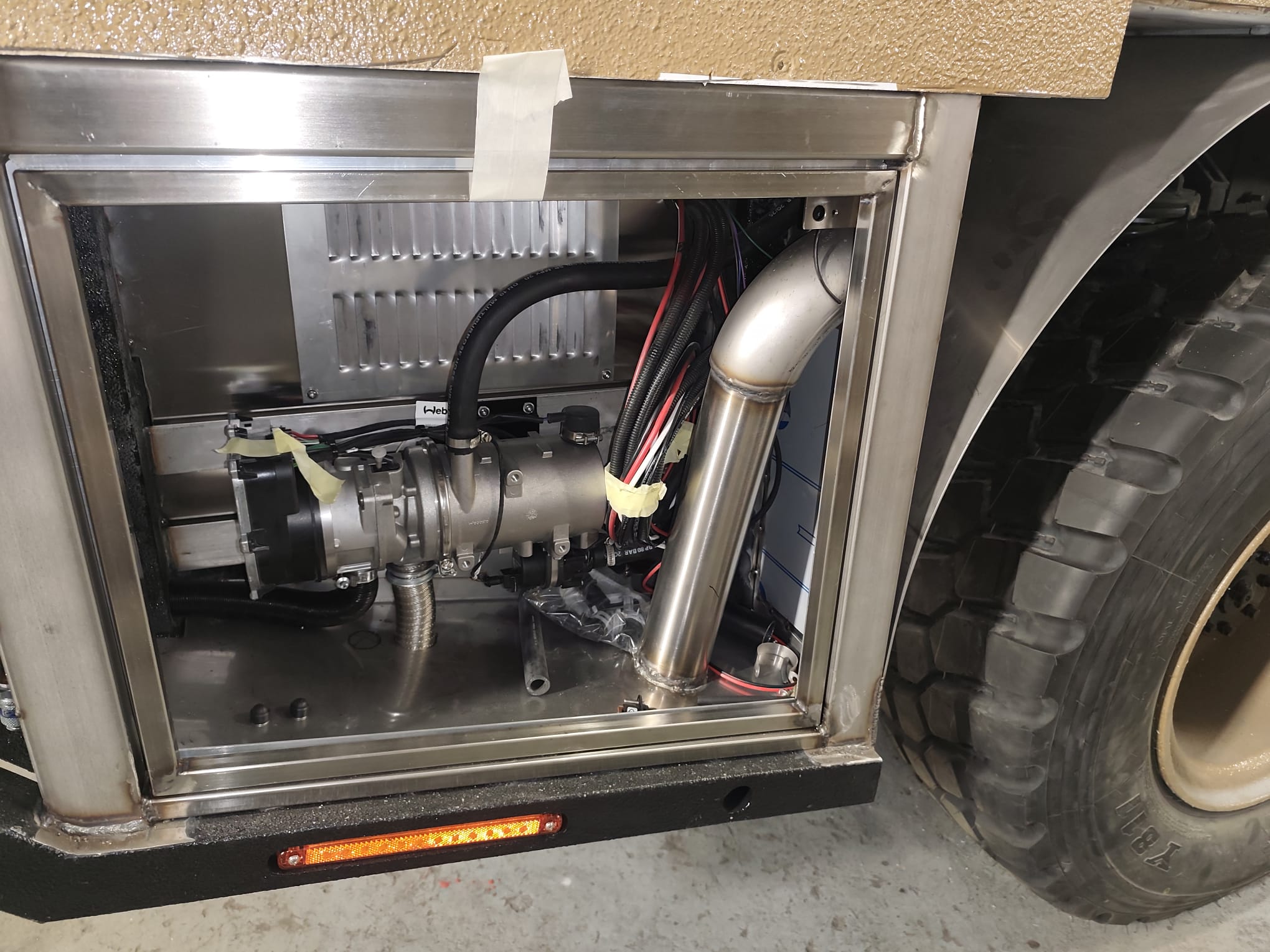
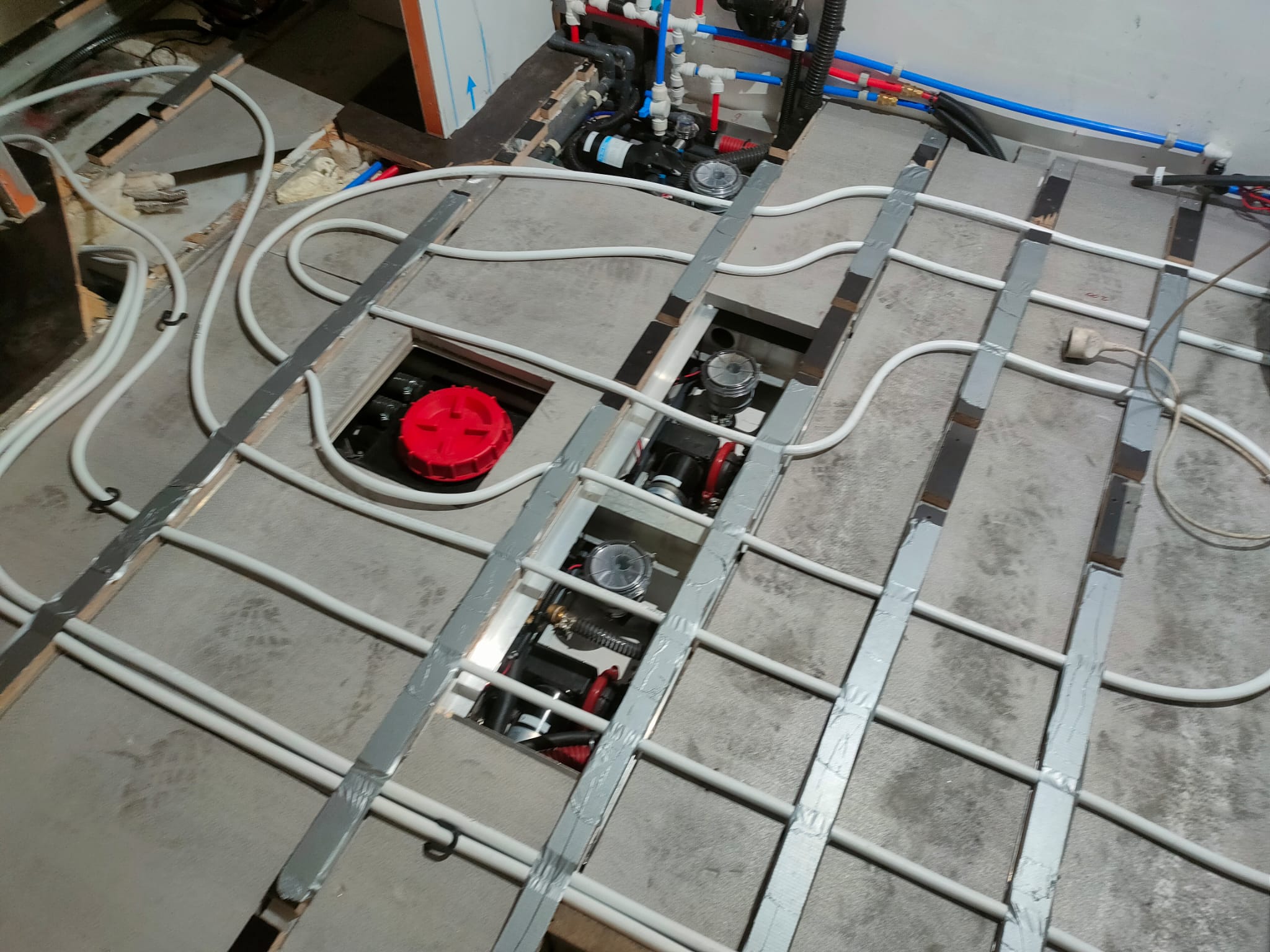
Comfort is engineered for both ends of the climate spectrum. Underfloor and convection heating provide warmth in sub-zero conditions, while powerful air conditioning and intelligent ventilation maintain a controlled environment in extreme heat.
Outdoor Living
Outside, a fully functional outdoor kitchen with its own cooktop, sink, and dedicated storage extends the living space beneath the awning. A separate outdoor shower provides a practical way to rinse off before returning inside the habitat.
The Garage
A dedicated rear garage provides secure storage for electric bikes, outdoor equipment, tools, and expedition gear — keeping everything organized and accessible without taking space away from the living environment.
The Third Axle.
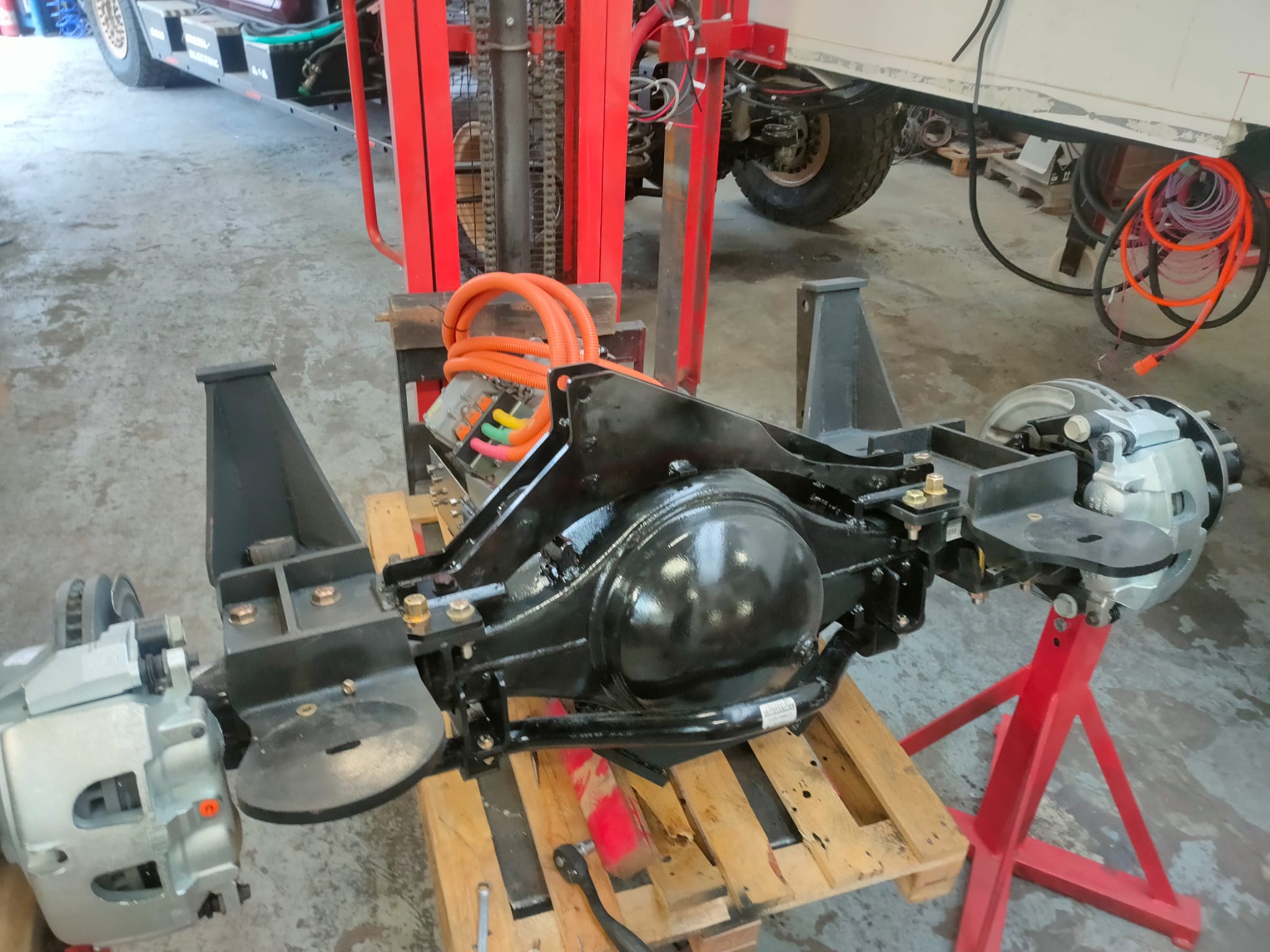
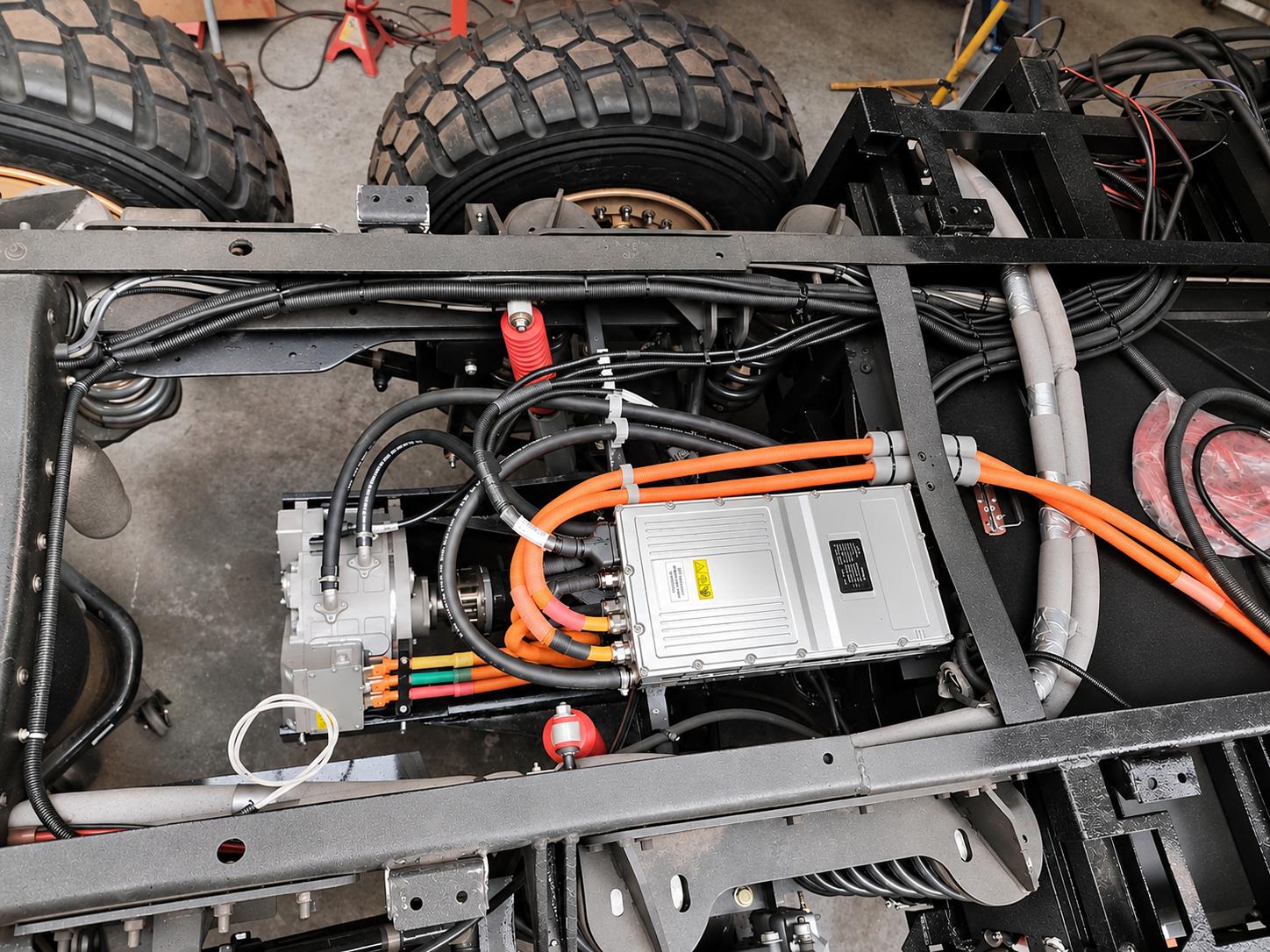
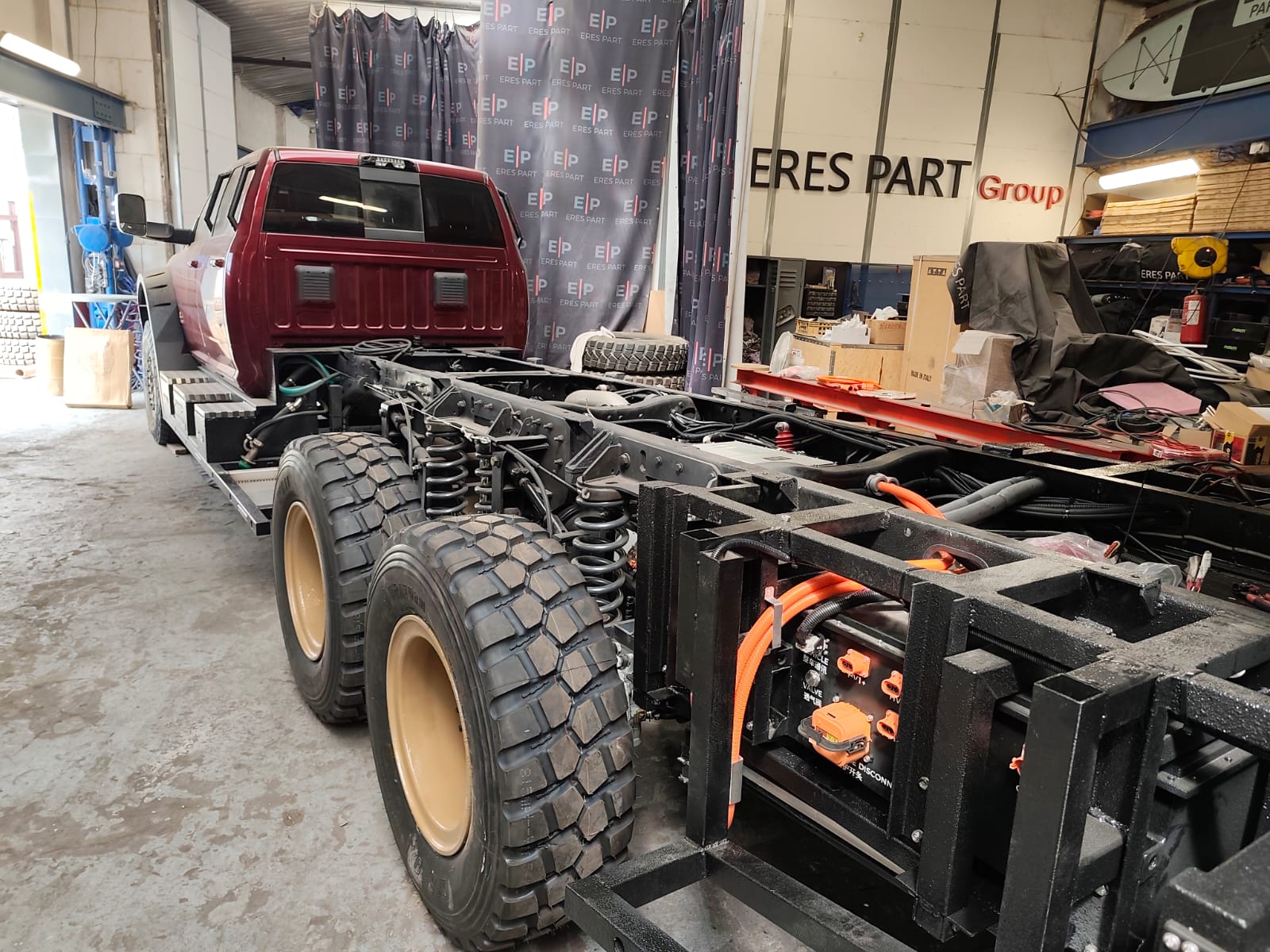
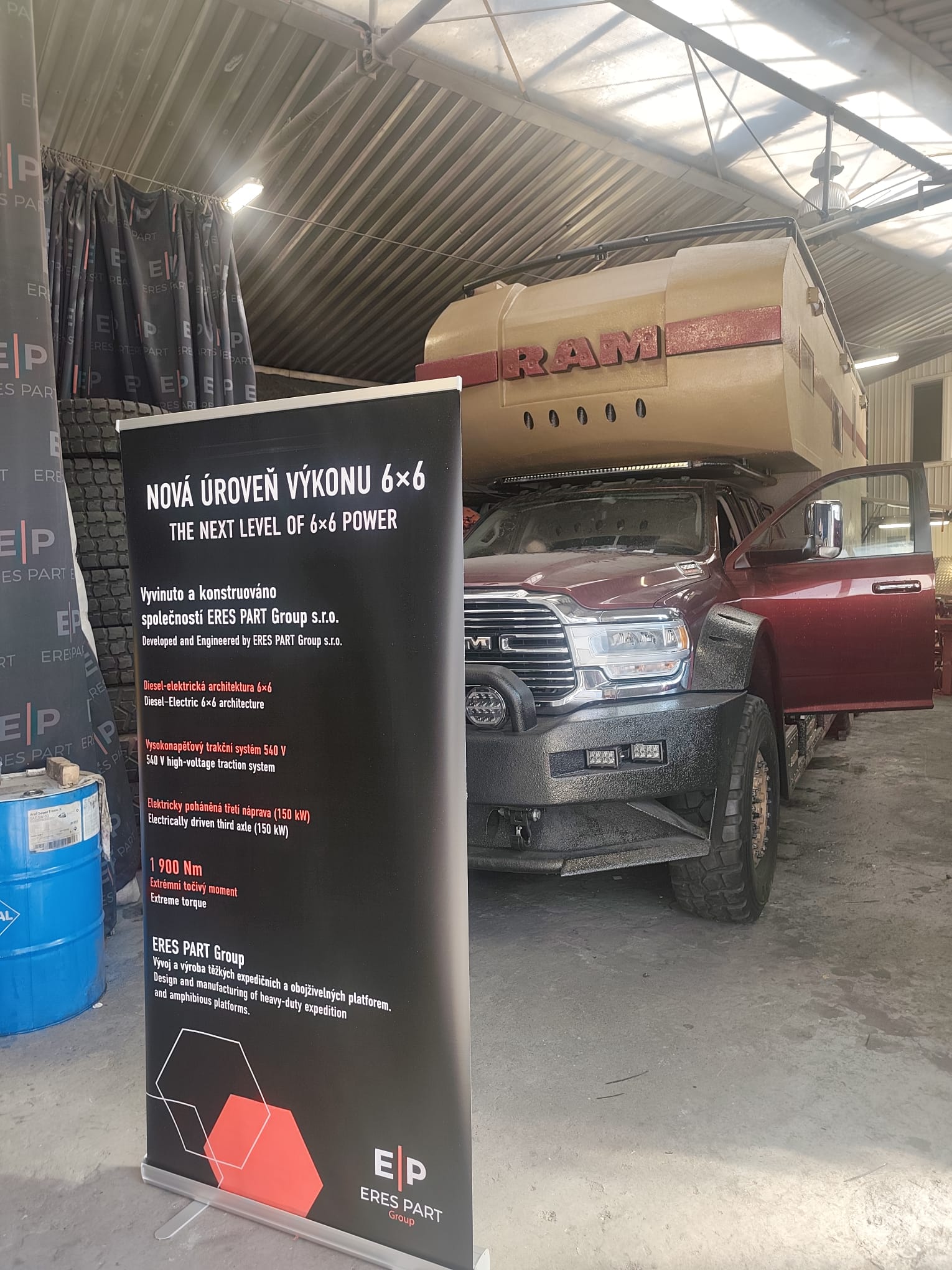
Every great machine has a secret. The Meridian’s secret is its third axle. The front two axles carry the proven soul of American muscle — a Cummins diesel drivetrain delivering raw, repairable, field-serviceable 4×4 power. But the third axle? That is where Czech engineering changes the game. A 150 kW pure-electric powerhouse running on a 540V high-voltage architecture. 1,900 Nm of total system torque. Silent, instant, and relentless.
Diesel Heart. Electric Soul.
On difficult terrain, that intelligence becomes capability. The electric third axle delivers immediate torque at low speeds, adds traction when the conventional drivetrain needs it most, and provides precise power across steep climbs, loose surfaces, and technical ground.
This is not a hybrid. This is a diesel-electric locomotive philosophy applied to the most hostile environments on Earth.
Architecture
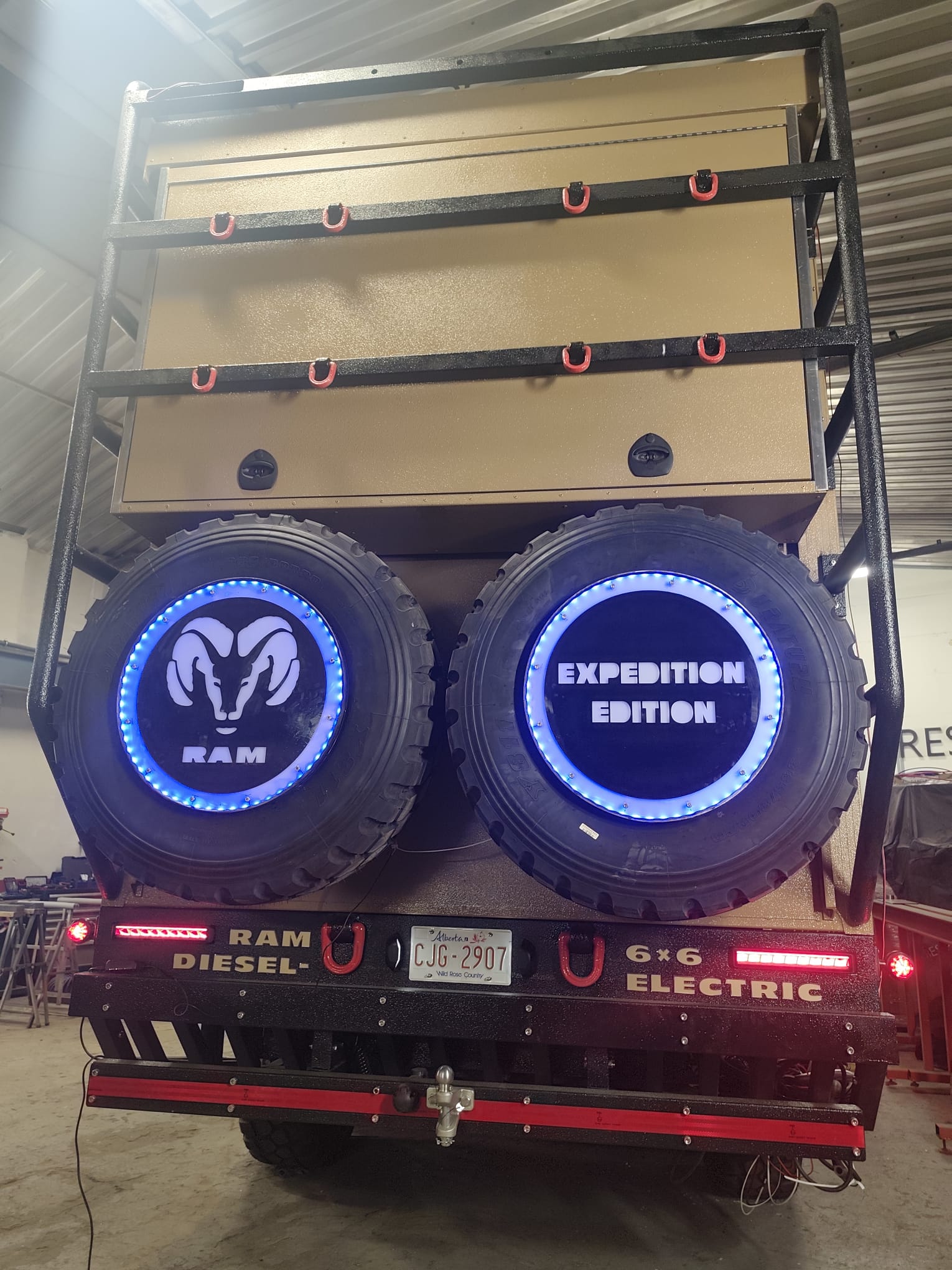
Diesel-Electric 6×6
Traction Voltage
540V high-voltage
Electric Axle Output
150 kW
Total System Torque
1,900 Nm
The Chinese Motor. The Czech Brain.
The third axle is not a bolt-on kit. It is a ground-up integration of two engineering cultures.
After a lengthy search, we selected a state-of-the-art Chinese motor and electrical drivetrain manufactured by a company that specialises in one thing: converting heavy-duty diesel trucks to electric power. We did not choose them for cost. We chose them because they had already solved the problems we were about to face – thermal management under sustained load, high-voltage traction control in low-grip conditions, and the brutal torque demands of mountain climbing with a gross vehicle weight north of nine tons.
Our requirements were specific. We wanted additional torque, but we also wanted lower fuel consumption across the entire duty cycle. We wanted to reduce stress on the main driveshafts during prolonged mountain climbing, where the Cummins would otherwise be screaming at peak load for hours. And critically, we wanted a reliable backup – a second propulsion system that could move the vehicle if the main engine suffered a failure 400 kilometres from the nearest qualified mechanic.
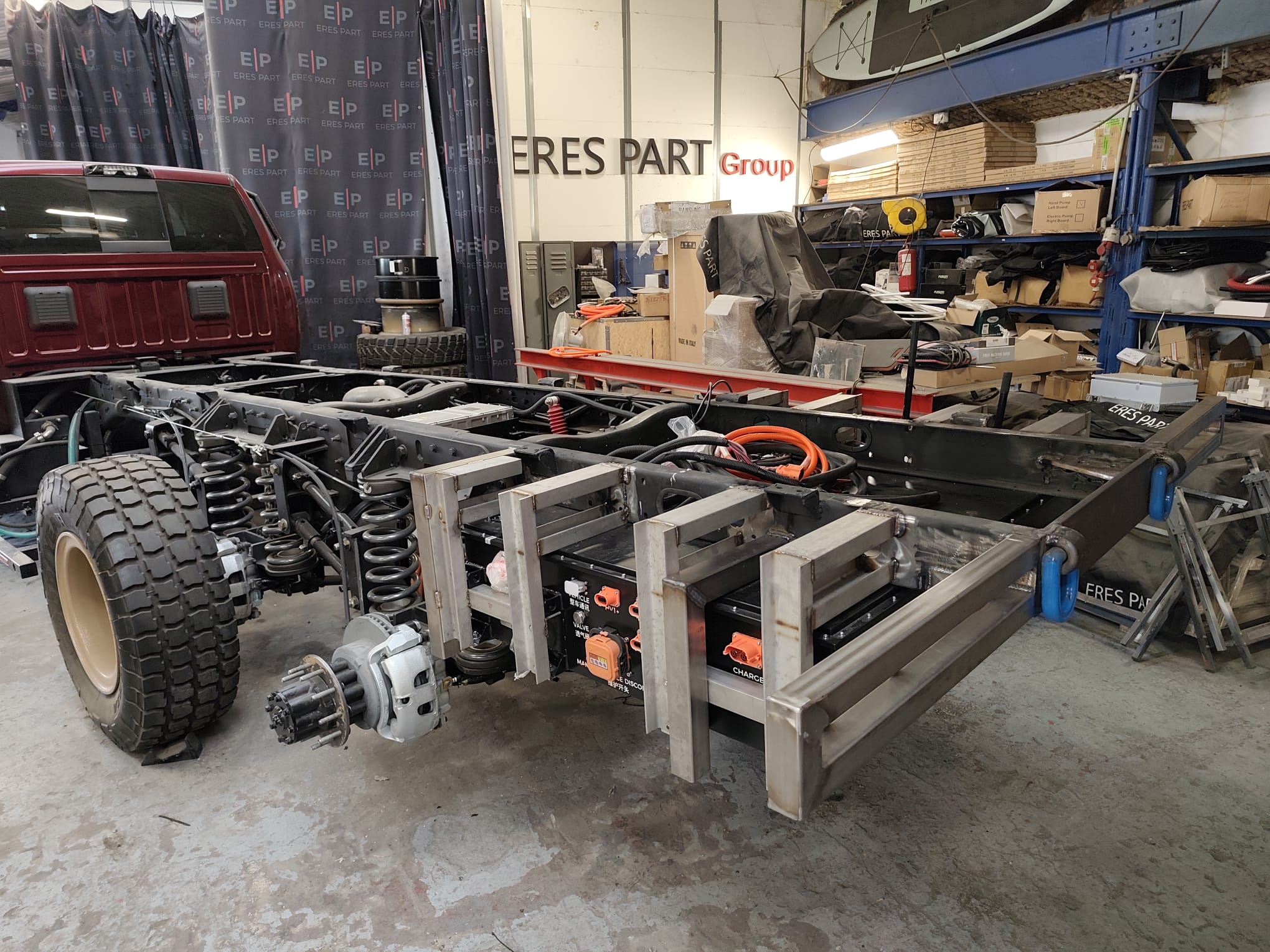
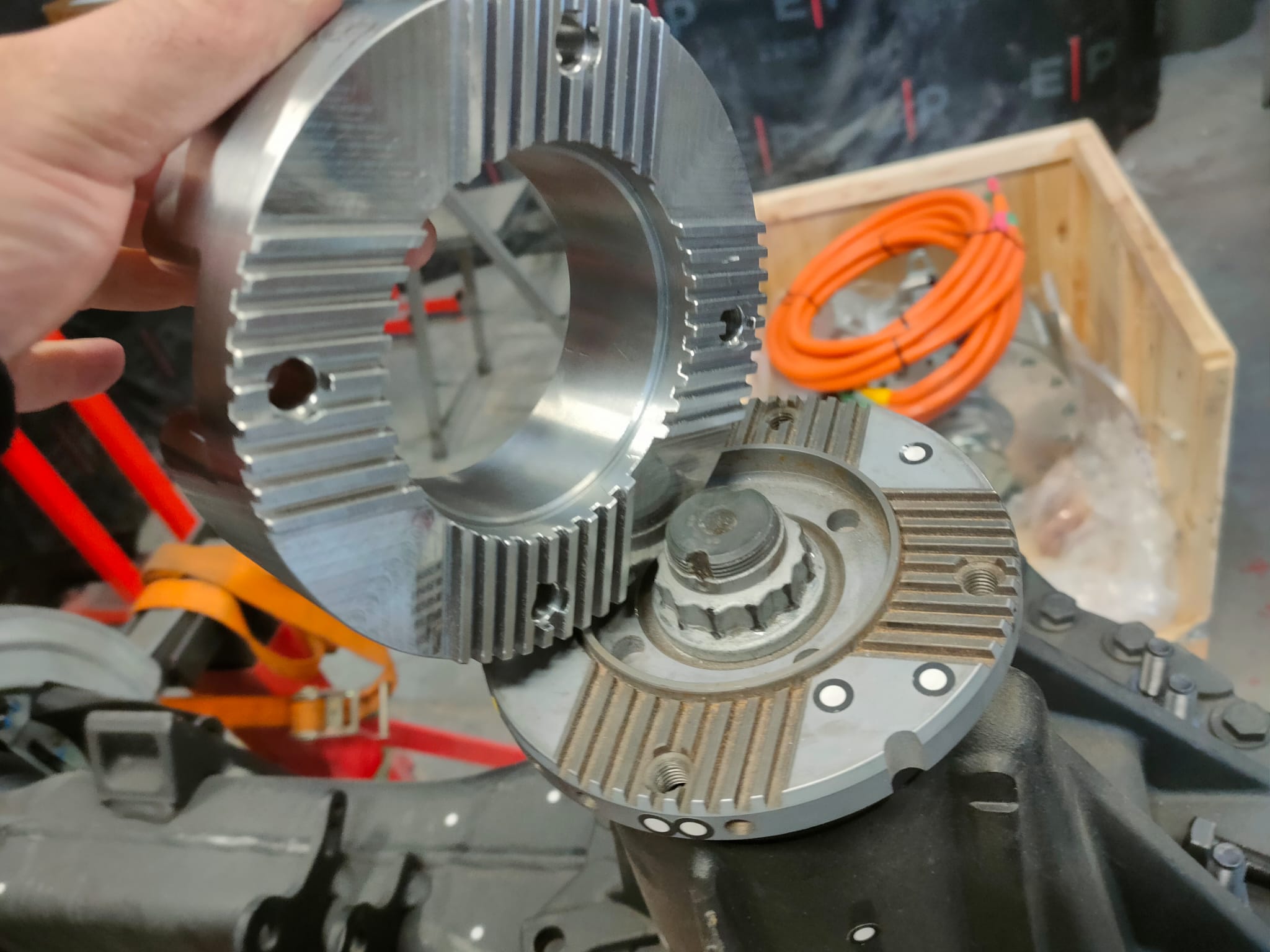
To achieve this, we purchased a standard RAM 5500 rear axle – the same hardware found under thousands of American work trucks – and integrated it with the Chinese electric motor and a 540V traction battery. This was not a simple marriage. The axle spoke mechanical language. The motor spoke electrical. The RAM drivetrain computer spoke a proprietary dialect that wanted nothing to do with either.
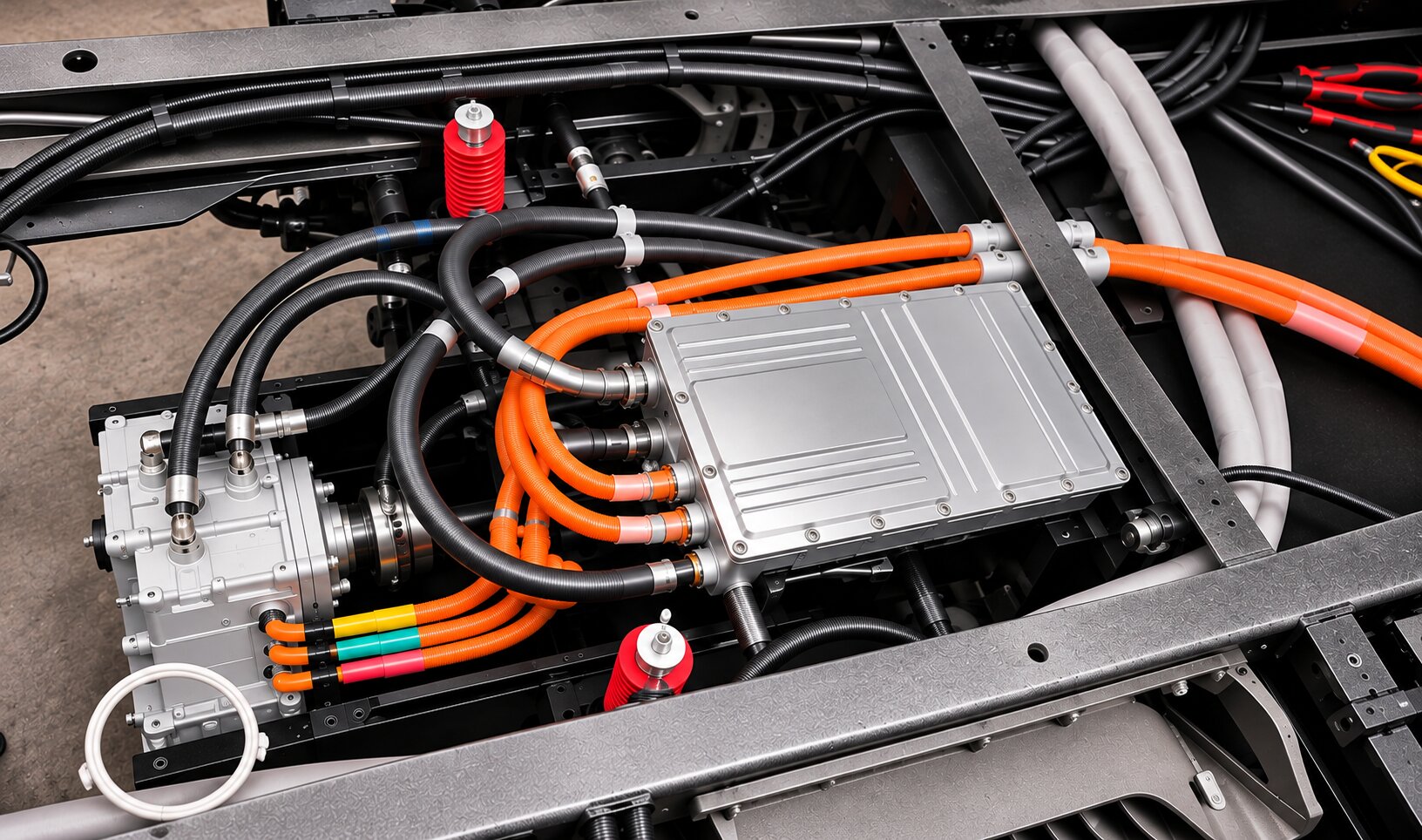
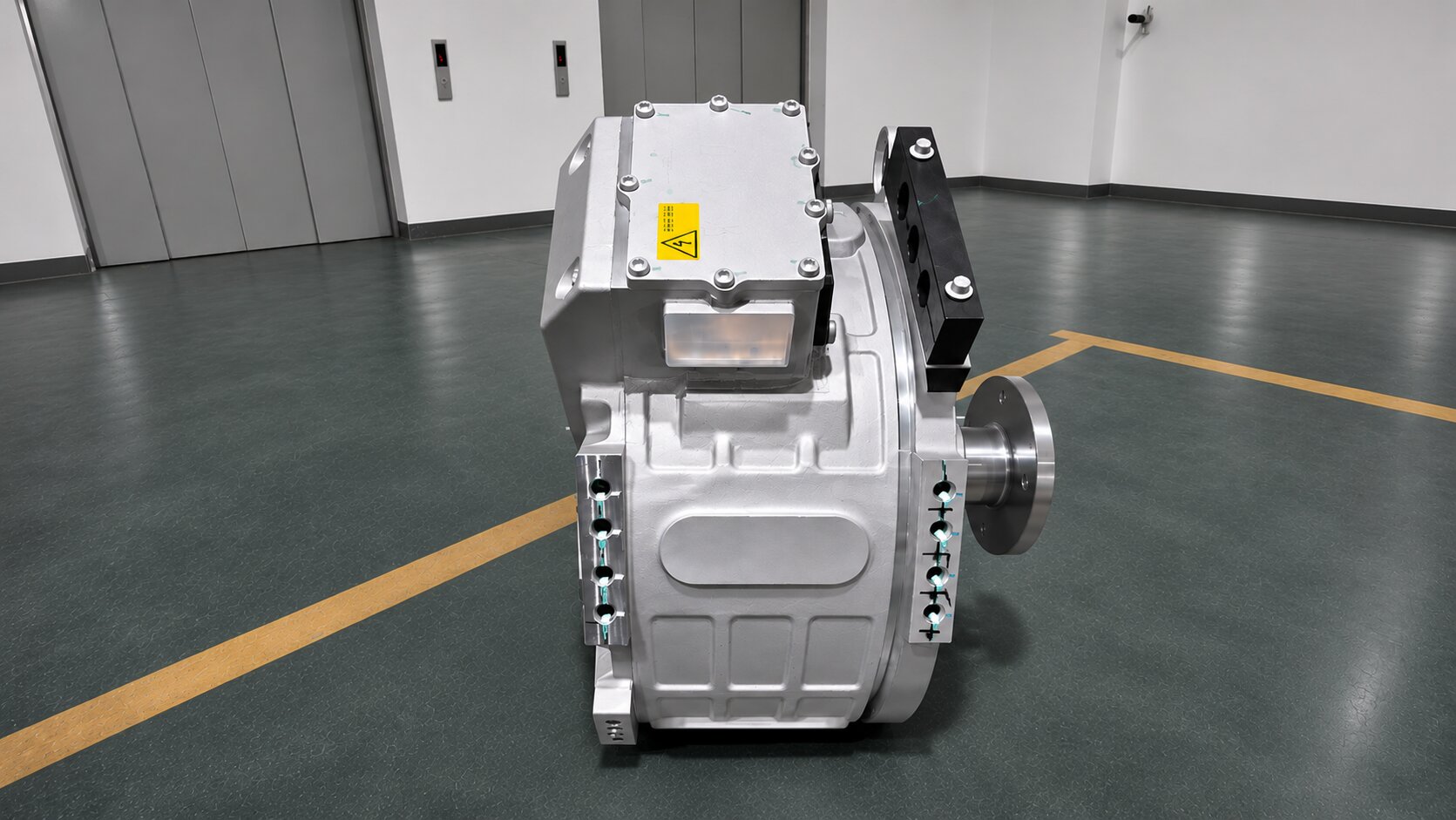
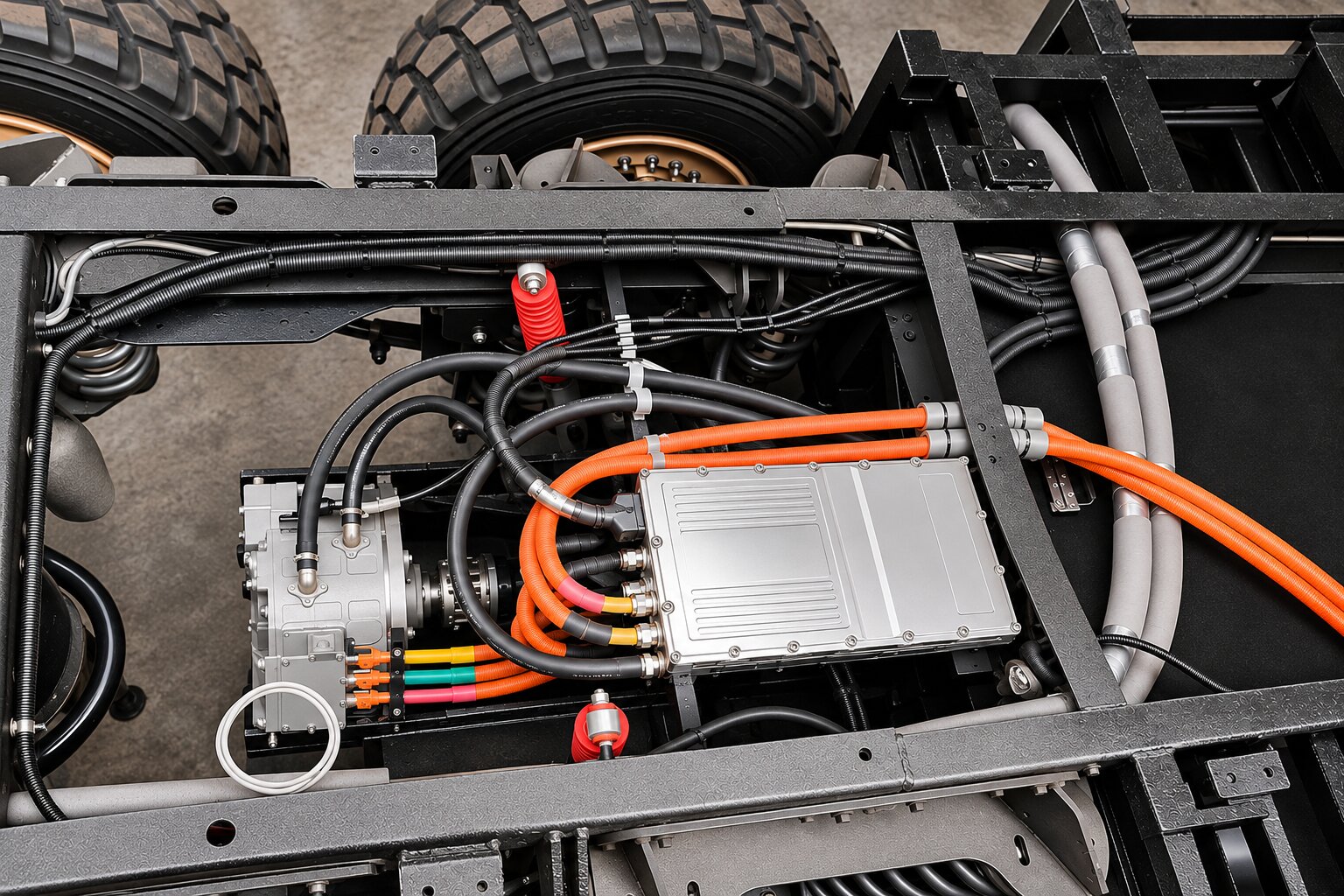
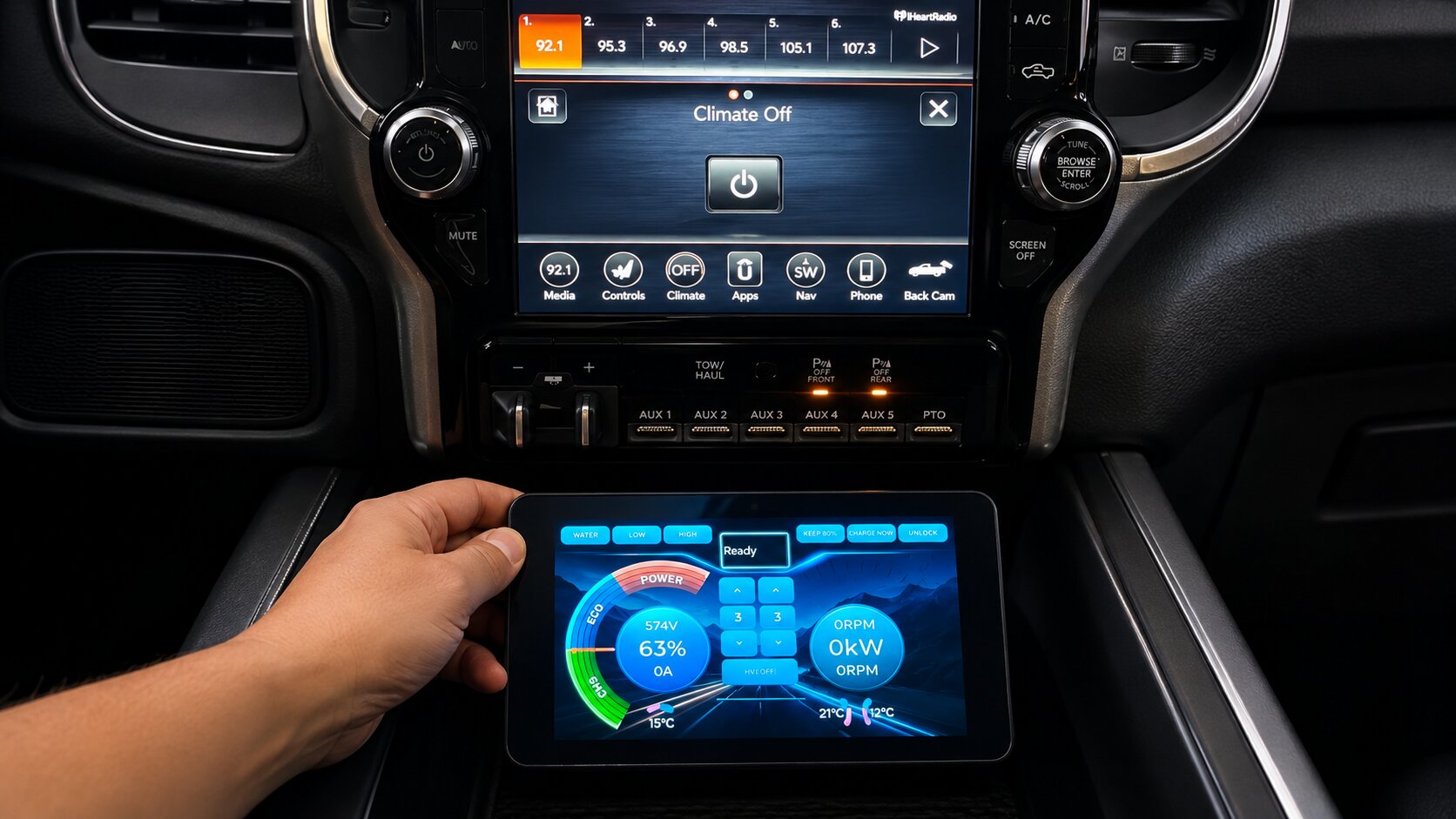
A professional ERES PART engineer developed a custom PCB board and wrote the integration software from scratch. This board translates between the Chinese traction controller, the RAM drivetrain computer, and the transmission in real time. It manages torque distribution, regenerative braking, and thermal protection. It is not an aftermarket hack. It is bespoke firmware for a bespoke machine.
The result is a third axle that does not merely assist. It thinks.
Integration & Testing
After hundreds of hours in the factory, after sleepless nights staring at CAD drawings, after engineering solutions for problems we never anticipated, we are proud of what we built. We hope to spend many years on the road proving that it was worth every hour.
The Factory Floor
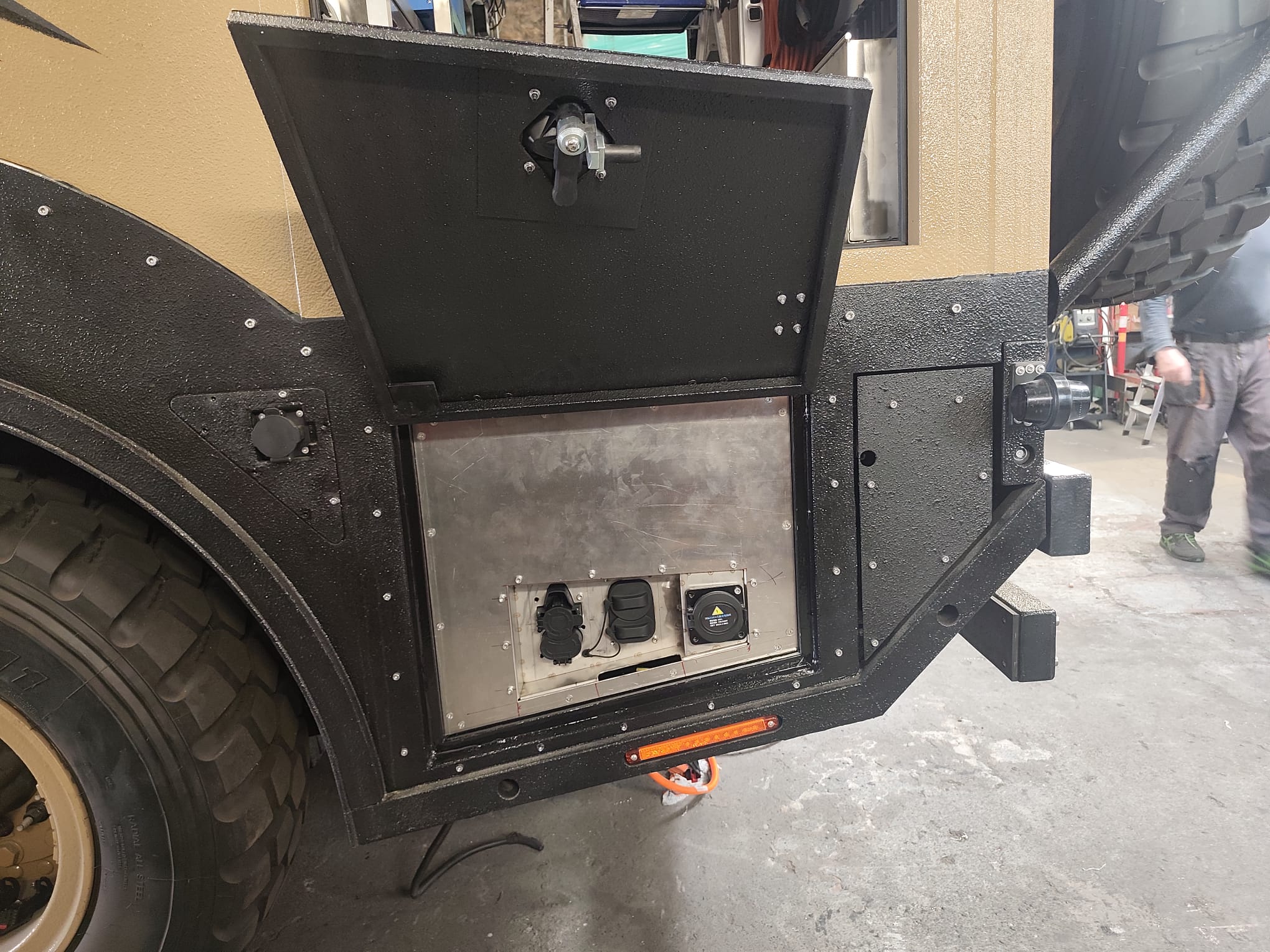
We spent more time in the workshop than in our own beds. Together with the ERES PART Group team in the Czech Republic, we did not just modify a chassis. We reimagined what a mobile habitat could be when divorced from campgrounds, fuel stations, and repair shops.
Every weld was questioned. Every gram was argued. Every system was designed with a single premise: What happens when the nearest help is 800 kilometers away?
Capabilities
Engineered to leave infrastructure behind.
CHASSIS & MOBILITY
- 6×6 expedition platform
- 2022 RAM 5500 heavy-duty chassis
- Cummins diesel drivetrain
- 150 kW electric third axle
- 1,900 Nm total system torque
ENERGY & FUEL
- 650 L diesel capacity
- 43 kWh / 540 V traction battery
- 16.5 kW onboard AC power
- Integrated solar generation
RANGE & AUTONOMY
- 3,000 km driving range
- 60 days off-grid autonomy
WATER
- Multi-source water acquisition architecture
- 4 independent water intake systems: suction, pressurized, submersible, rainwater collection
- 25 m remote-source reach
- Integrated autonomous water supply system
HABITAT
- Fully integrated stressed-skin habitat
- Engineered for thermal extremes
- Designed to withstand chassis torsional loads
CONNECTIVITY & INTELLIGENCE
- 4G / 5G / Starlink connectivity
- Dual onboard computers
- Edge AI computing
- Integrated system monitoring and diagnostics
SERVICEABILITY
- Global parts availability
- Field-serviceable architecture
- Designed for operation far beyond conventional infrastructure