
Our Story
Two years. One convergence.
The Vision
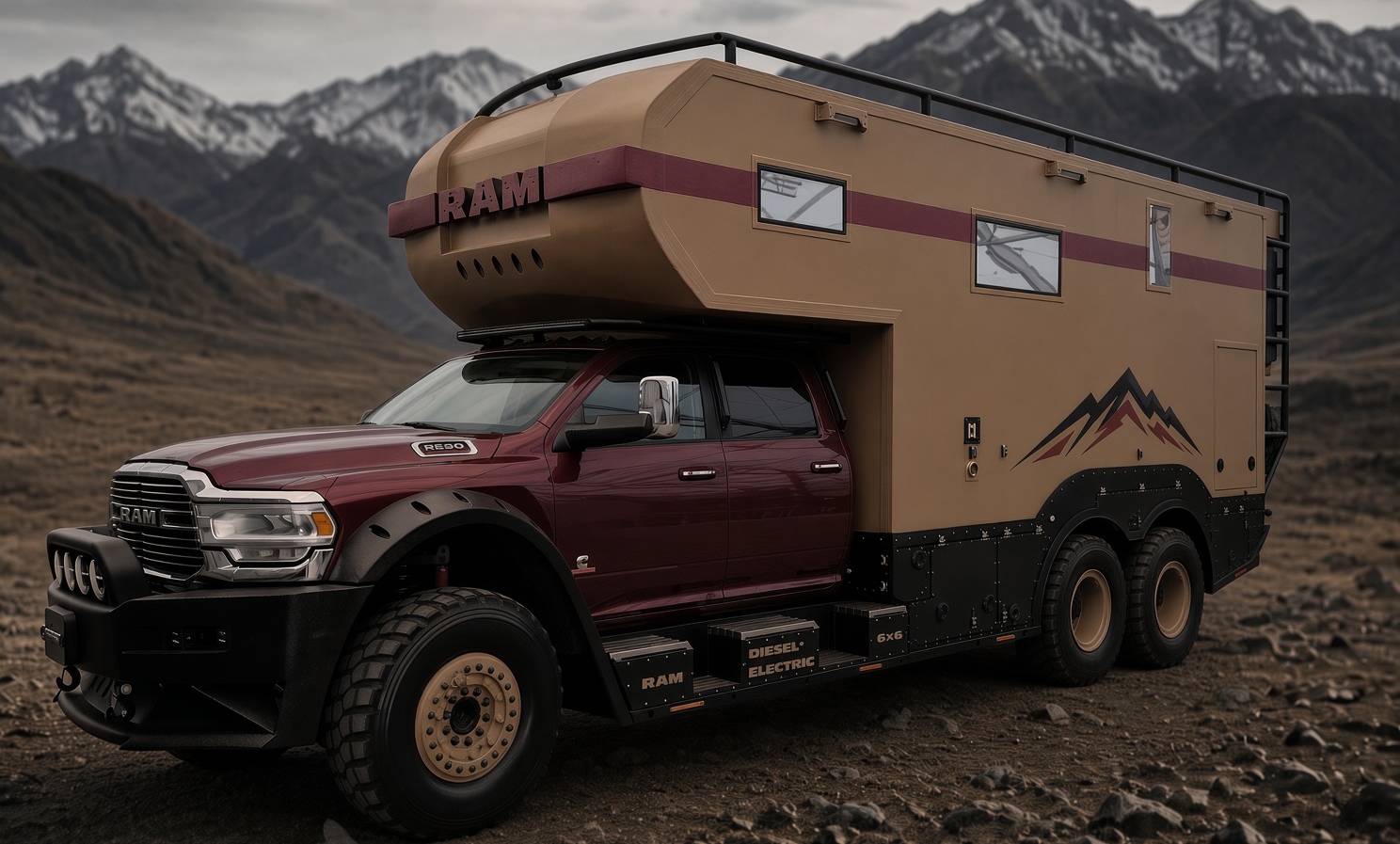
We wanted to build a vehicle for a different kind of freedom — one that begins where civilization ends. A fully self-sufficient home and expedition platform, designed to carry everything needed to live, explore and remain protected for extended periods in the most remote corners of the planet. Our ambition was to go beyond the limits of infrastructure — and make the wild our destination, not our boundary.
Not a camper. Not a truck. A mobile base.
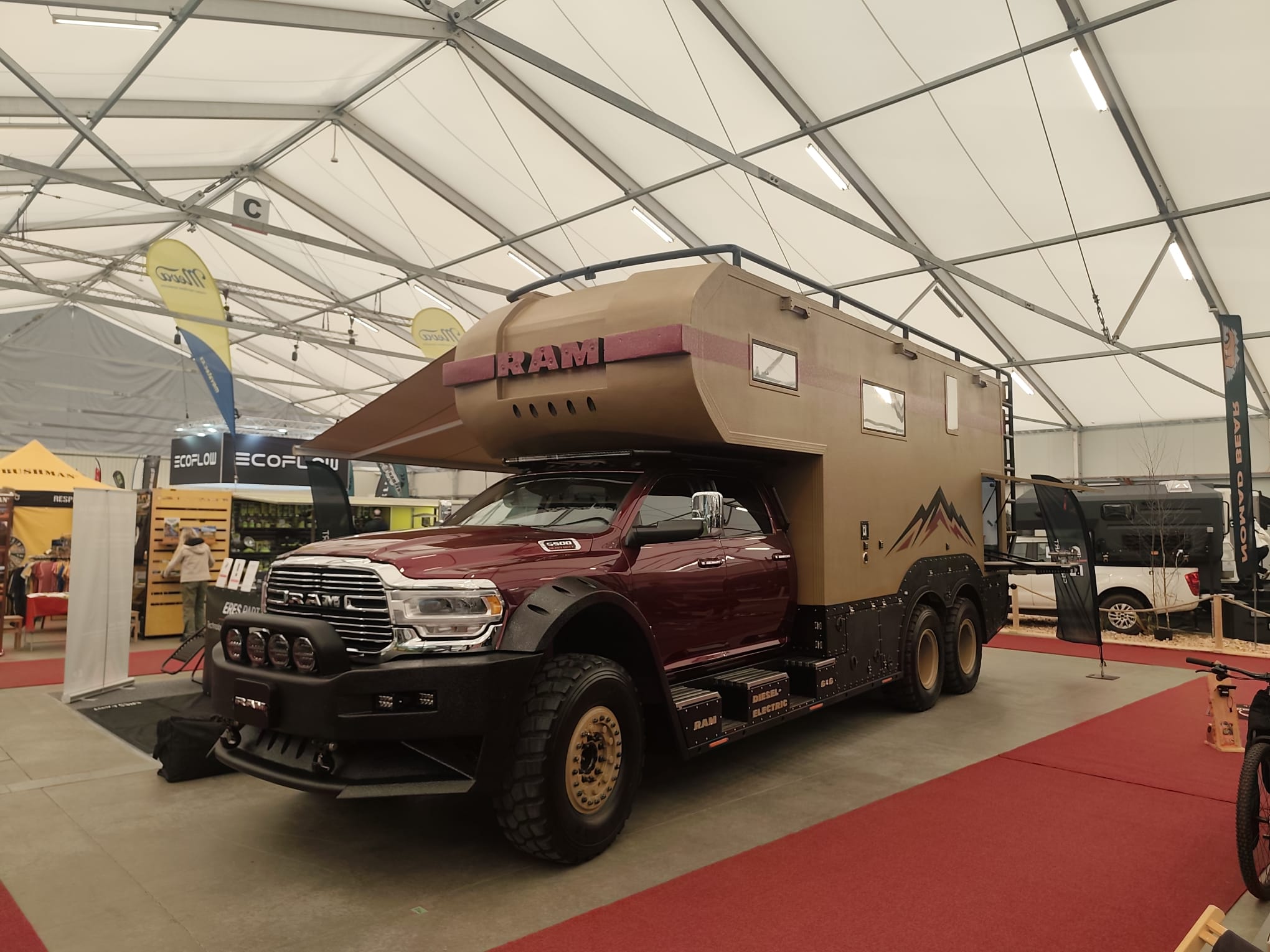
It took us two years.
Two years of researching motorhomes, expedition vehicles,, and the uncomfortable gap between what the market offered and what the wilderness actually demands. We looked at factory-built overlanders that crumbled after one season of salt and dust. We looked at military trucks that treated comfort as a defect. We looked at luxury RVs that would strand you the moment the pavement cracked.
None of them were wrong. None of them were ours. It was not easy to decide what we truly wanted — and what we were truly willing to pay for, in both money and time. In the end, we found a compromise between ambition and reality. Not a surrender. A convergence.
Defining the Requirements
We were searching for a heavy-duty chassis. Not necessarily a truck in the traditional sense, but something strong enough to carry what we were about to build: a fully integrated habitat, 650 liters of fuel, four independent water systems, and enough battery capacity to power a small cabin.
We also wanted a reliable diesel engine with an automatic transmission. And crucially, we wanted a quiet, pickup-like driving experience in a modern cab.
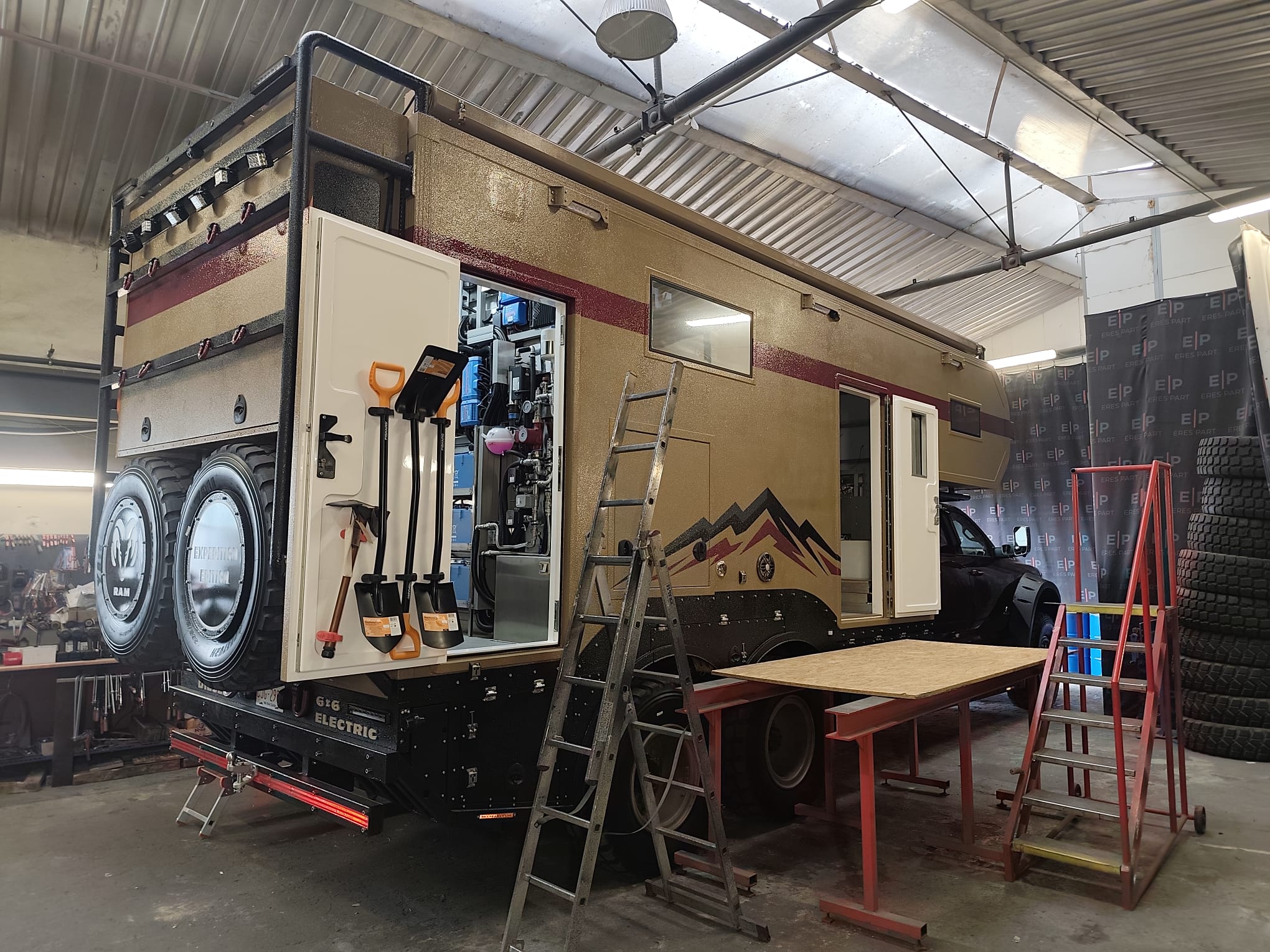
A vehicle that could leave infrastructure behind.
The Foundation
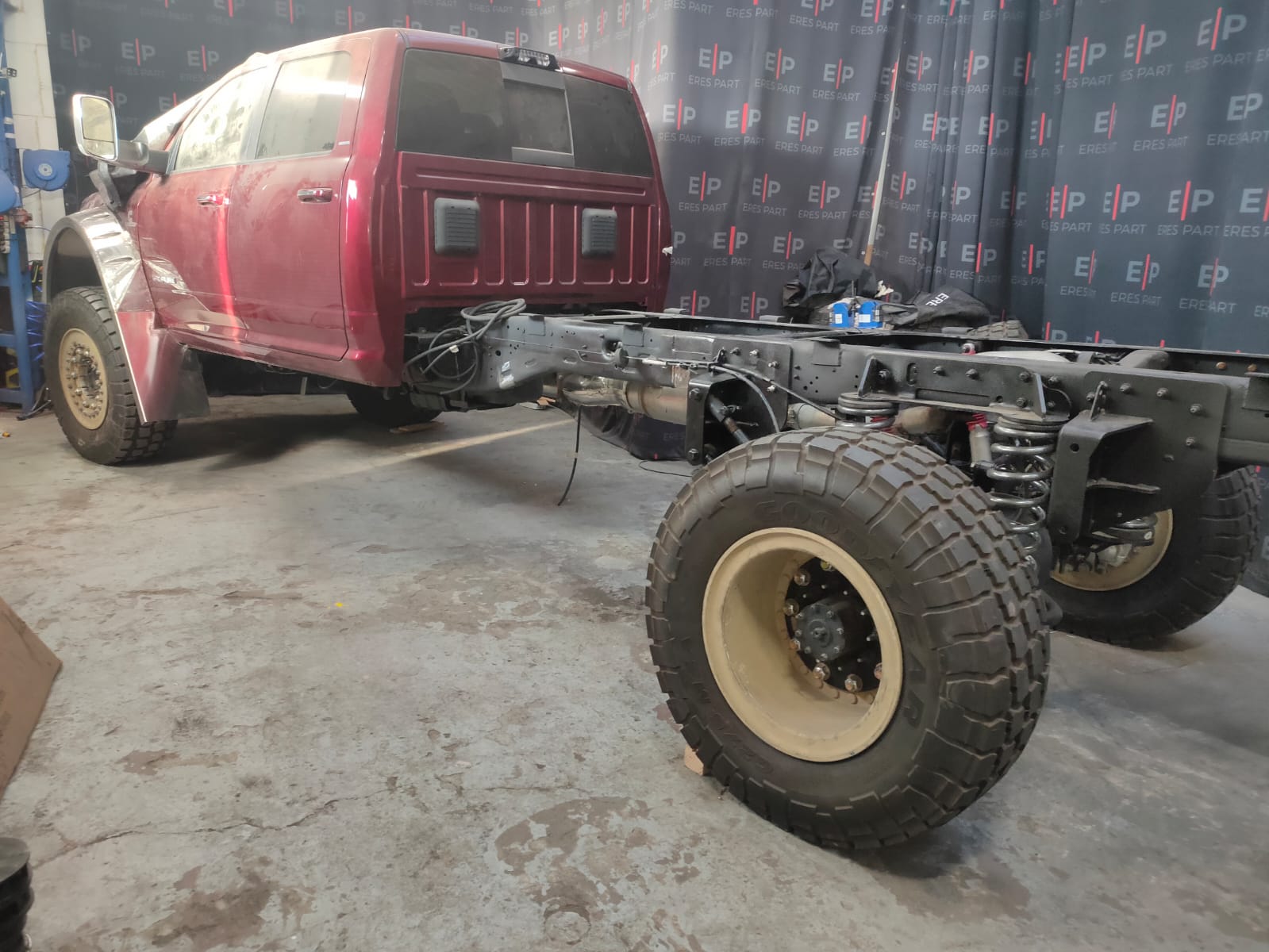
After surveying the global market, the only chassis that met all of these criteria was the 2022 RAM 5500.
It was not chosen for prestige. It was chosen for global survivability. When you are in the Bolivian Altiplano, a Cummins part can be found. A bespoke European transfer case cannot. The RAM 5500 gives us American muscle with a global logistics network.
The intelligent foundation for an unintelligent environment.
Building the Machine
Once the chassis was chosen, the next challenge was to turn it into something fundamentally different from a conventional expedition vehicle.
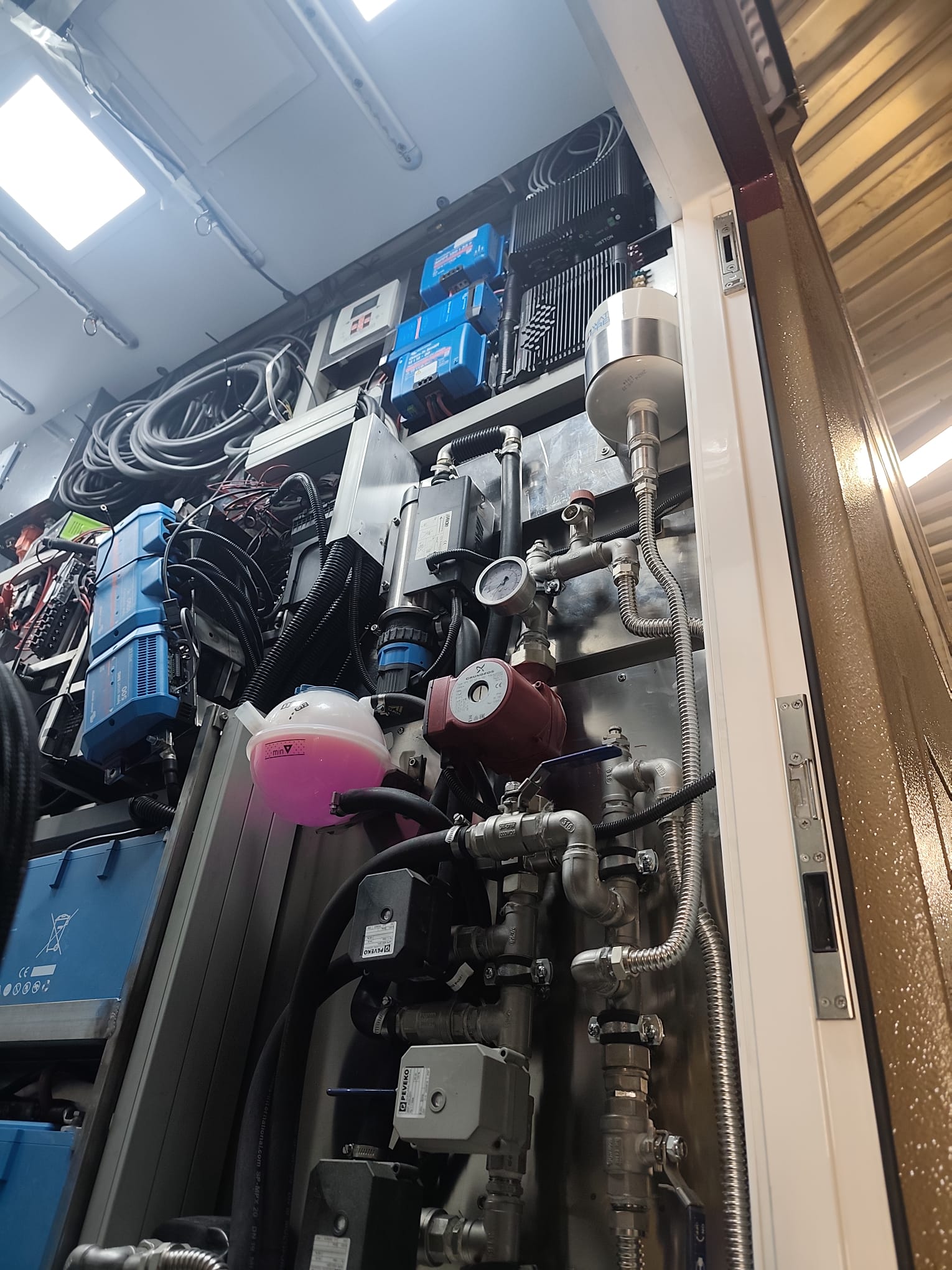
We needed a mobile base capable of operating independently — generating and storing its own energy, carrying enough fuel and water for extended stays, maintaining communications, and keeping every critical system under control.
So we built the machine around five essential systems:
A 43 kWh battery system, supported by solar generation and 16.5 kW AC power, designed to provide reliable energy without relying on a grid.
The chassis could take us there. The habitat had to let us stay.
Building the Habitat
A conventional motorhome is designed around roads, infrastructure and relatively predictable conditions. That was not the environment we were designing for.
We needed a living structure capable of surviving the same conditions as the vehicle itself — extreme temperatures, severe off-road movement and the continuous torsional loads generated by a heavy-duty 6×6 chassis.
That meant the habitat could not simply be mounted onto the truck as a conventional box.
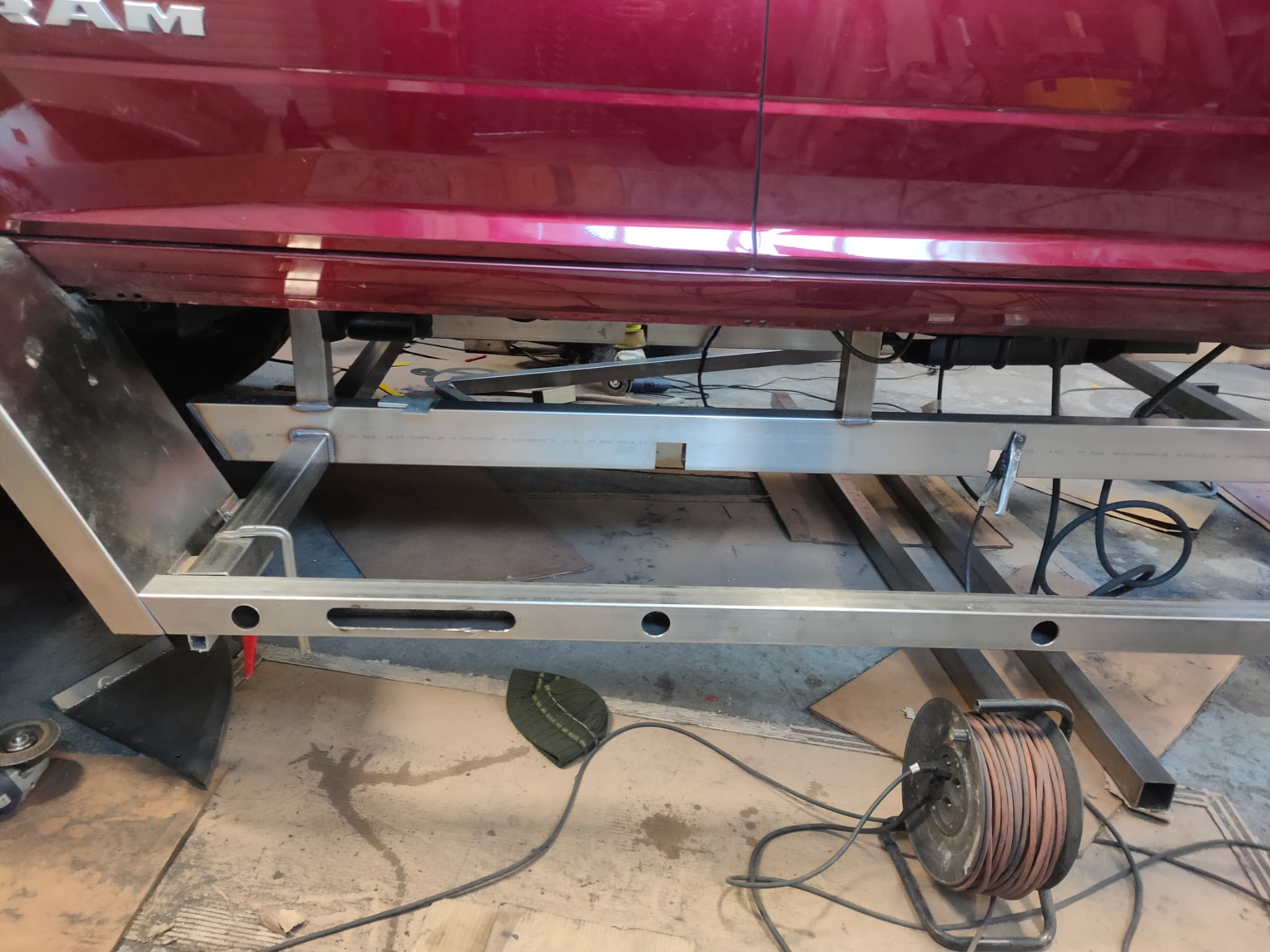
We developed a stressed-skin structure, engineered as an integral part of the vehicle. The body had to remain rigid enough to protect the interior, while accommodating the movement of the chassis beneath it. Every connection between the two became part of the structural equation.
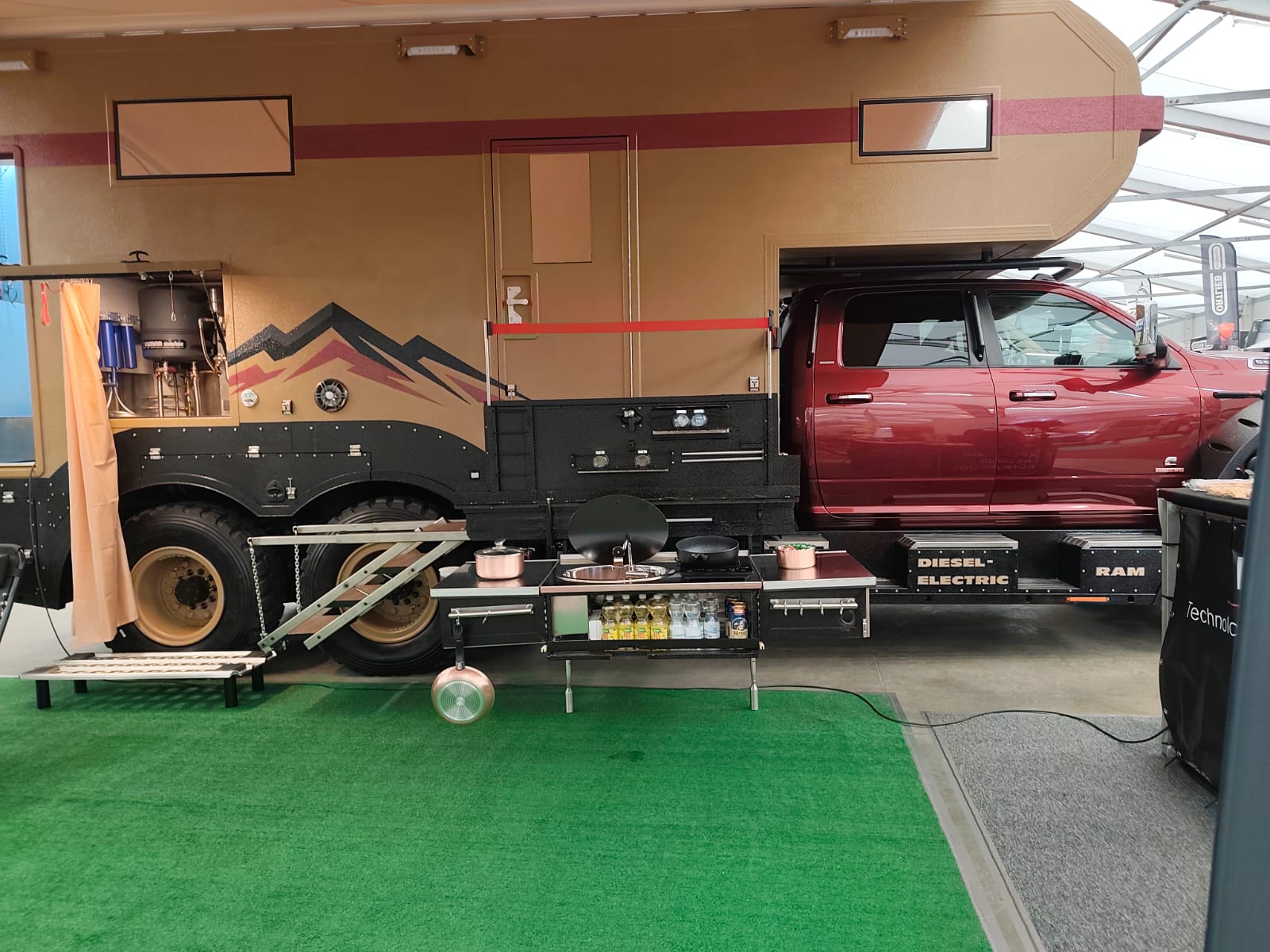
Inside that structure, we then had to create a completely different environment: a stable, thermally controlled and comfortable living space capable of operating far beyond conventional infrastructure.
The result was a habitat engineered not merely to travel with the vehicle, but to survive with it.
The Third Axle.
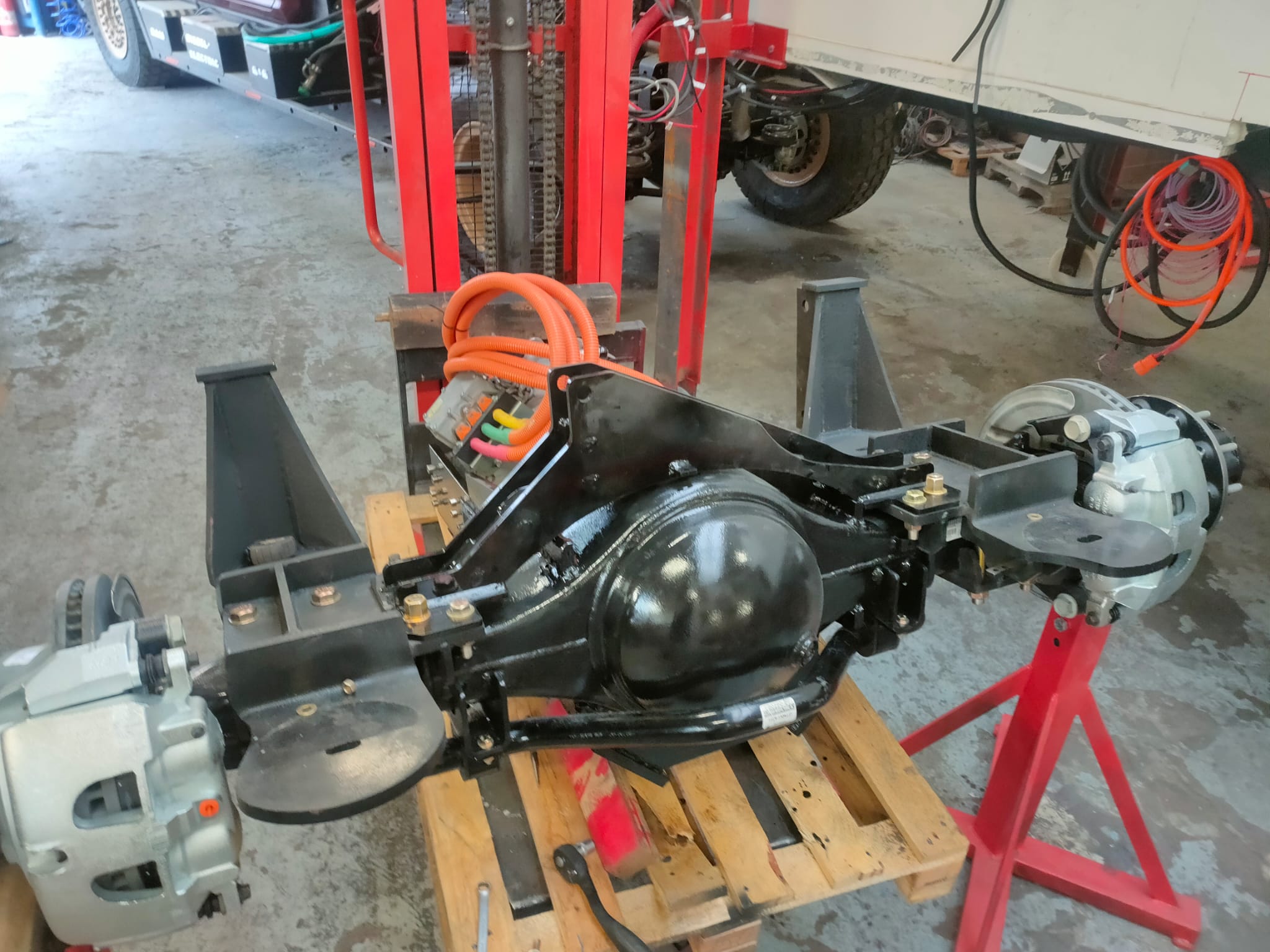
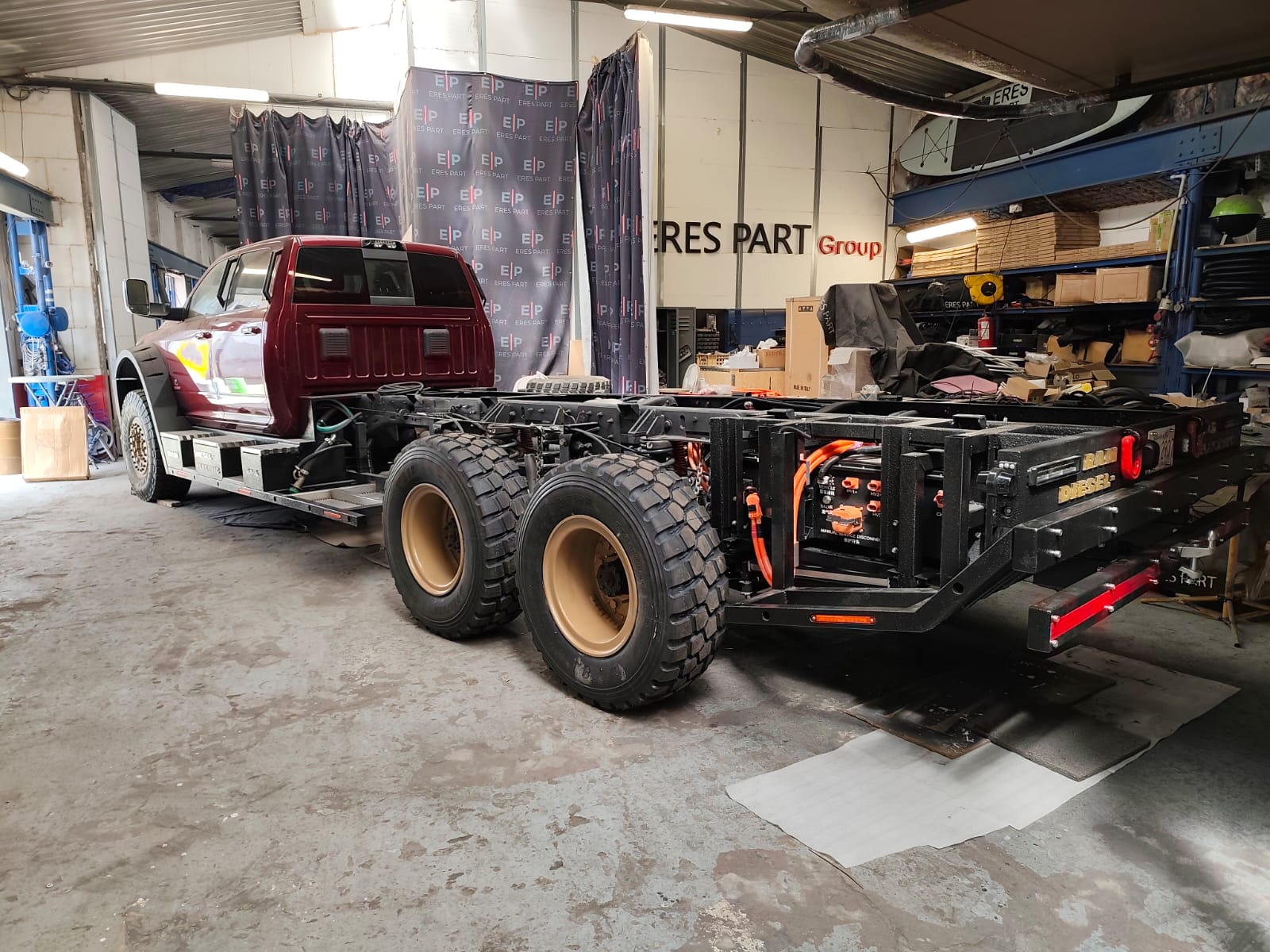
Every great machine has a secret. The Meridian’s secret is its third axle. The front two axles carry the proven soul of American muscle — a Cummins diesel drivetrain delivering raw, repairable, field-serviceable 4×4 power. But the third axle? That is where Czech engineering changes the game. A 150 kW pure-electric powerhouse running on a 540V high-voltage architecture. 1,900 Nm of total system torque. Silent, instant, and relentless.
Integration & Testing
After hundreds of hours in the factory, after sleepless nights staring at CAD drawings, after engineering solutions for problems we never anticipated, we are proud of what we built. We hope to spend many years on the road proving that it was worth every hour.
The Factory Floor
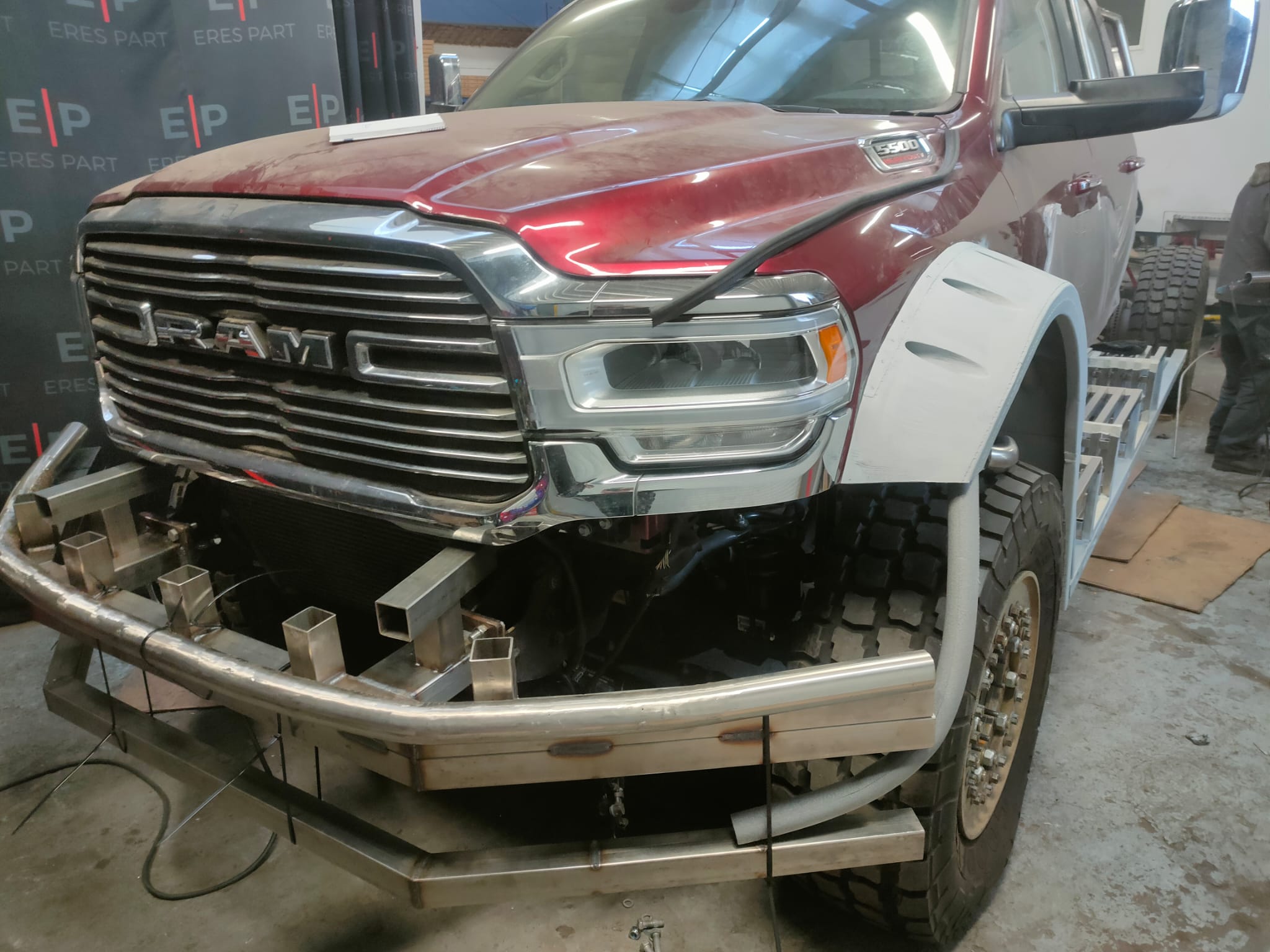
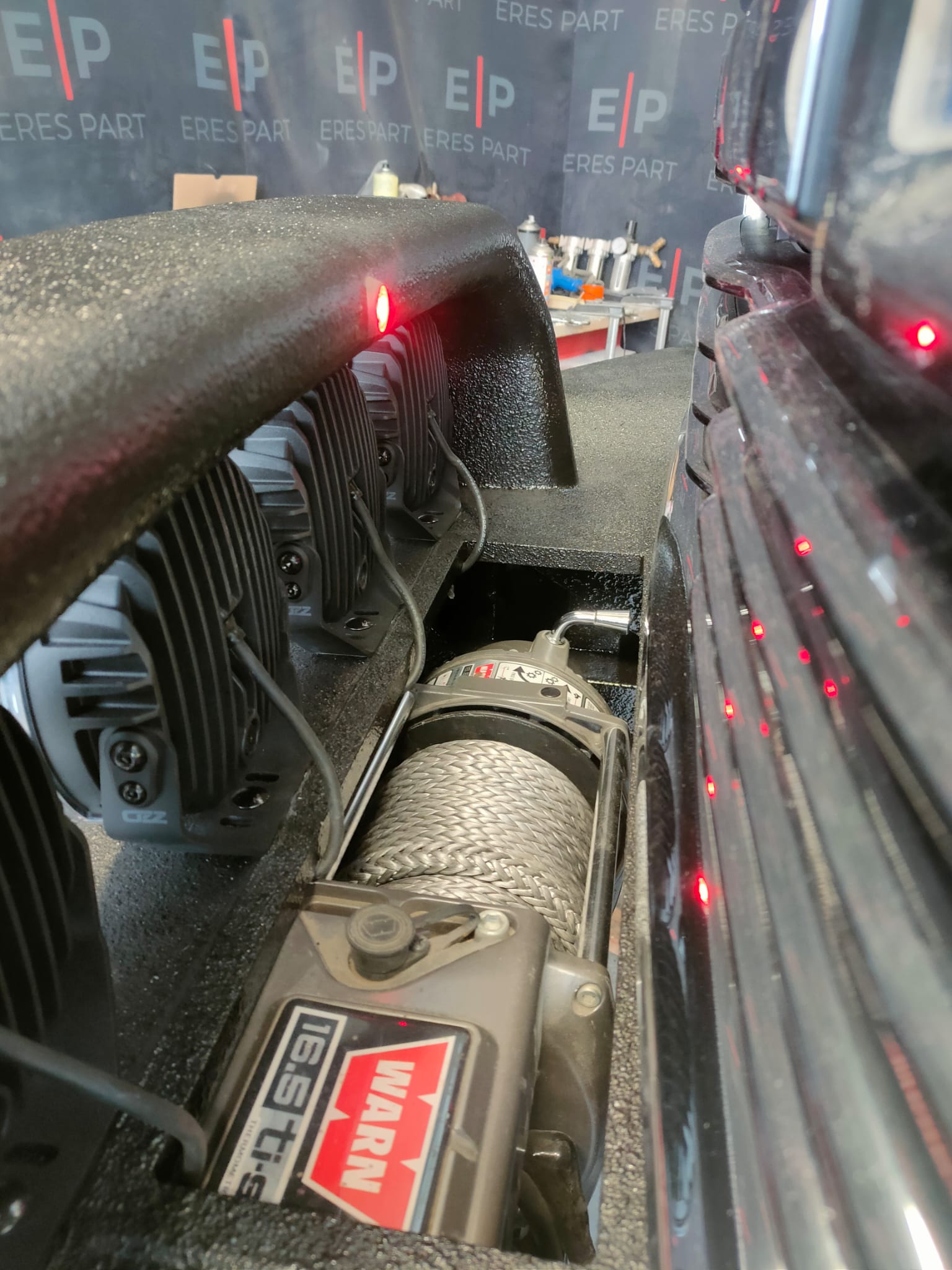
We spent more time in the workshop than in our own beds. Together with the ERES PART Group team in the Czech Republic, we did not just modify a chassis. We reimagined what a mobile habitat could be when divorced from campgrounds, fuel stations, and repair shops.
very weld was questioned. Every gram was argued. Every system was designed with a single premise: What happens when the nearest help is 800 kilometers away?
The result
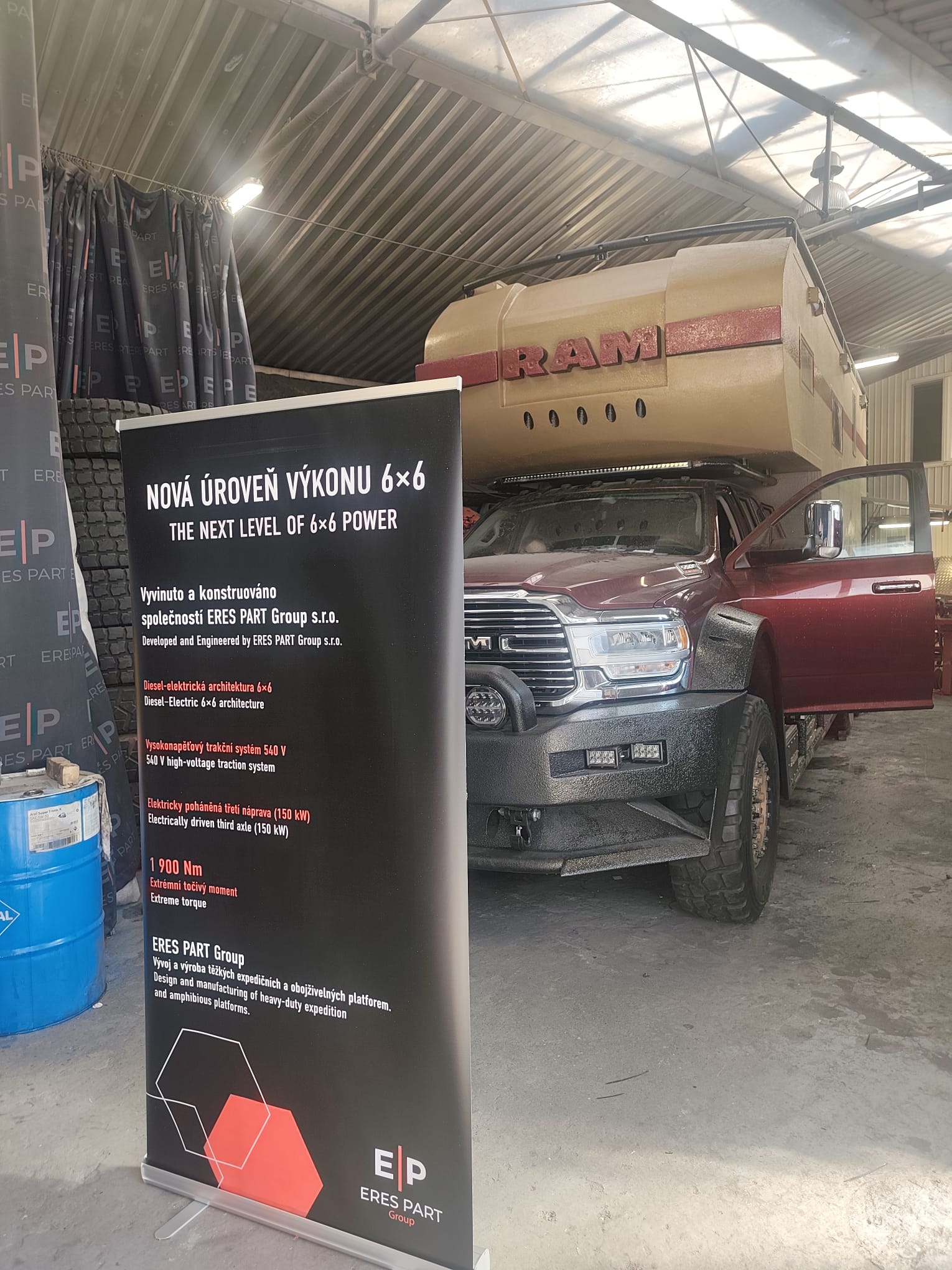
- 6×6 expedition platform
- 2022 RAM 5500 heavy-duty chassis
- Cummins diesel drivetrain
- 150 kW electric third axle
- 1,900 Nm total system torque
- Fully integrated stressed-skin habitat
- Engineered for thermal extremes
- Designed to withstand chassis torsional loads